Consumer Sentiment Crashes to Record Low 47.6 as Iran War Anxiety and Inflation Fears Converge
The University of Michigan's preliminary April reading of 47.6 is the lowest in the survey's 74-year history, with 98% of interviews conducted before the ceasefire. One-year inflation expectations surged to 4.8%, the highest since early 2025.
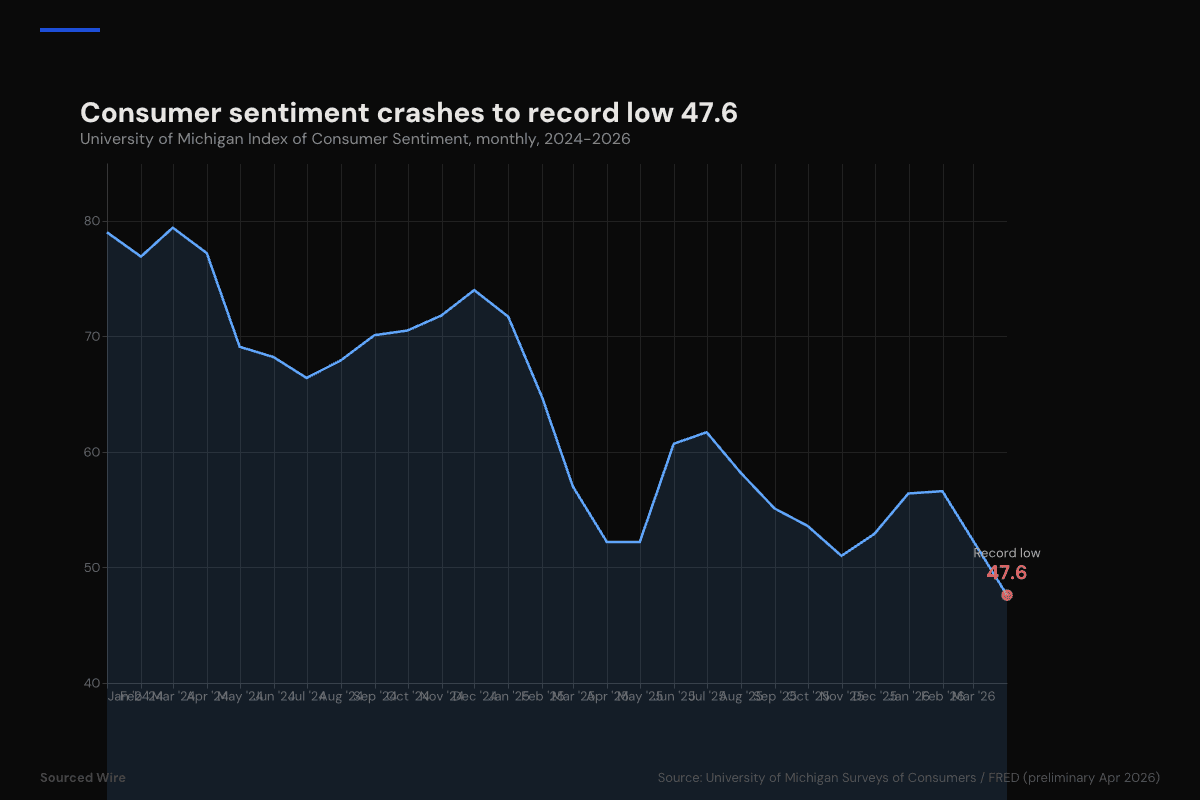
The University of Michigan's Index of Consumer Sentiment fell to 47.6 in its preliminary April reading, published on Friday, April 10 — the lowest in the 74-year history of the survey. The index dropped 16% from the February final reading of 56.6 (March data was not yet final at the time of the April preliminary). Survey director Joanne Hsu noted that 98% of interviews were completed before the US-Iran ceasefire was announced on Tuesday, meaning the reading captures peak war anxiety.
"Consumer sentiment sank about 11% this month, extending a decline that began with the Iran conflict," Hsu wrote in her commentary. "Open-ended comments show that many consumers blame the Iran conflict for unfavorable changes to the economy."
The numbers
| Component | April 2026 (preliminary) | February 2026 (final) | Change |
|---|---|---|---|
| Index of Consumer Sentiment | 47.6 | 56.6 | -15.9% |
| Current Economic Conditions | 50.1 | 56.6 | -11.5% |
| Index of Consumer Expectations | 46.1 | 56.6 | -18.6% |
| Year-ahead inflation expectations | 4.8% | 3.8% | +1.0 pp |
| Long-run (5-10yr) inflation expectations | 3.4% | 3.2% | +0.2 pp |
All three headline components — sentiment, conditions, and expectations — are at or near record lows. The expectations component at 46.1 is the weakest since 1980, when the US was in the thick of the Volcker-era disinflation and the Iran hostage crisis.
Why the inflation expectations matter
The Federal Reserve watches Michigan's inflation expectations closely, particularly the 5-10 year measure, because unanchored long-run expectations can become self-fulfilling. The jump from 3.2% to 3.4% is the third consecutive monthly increase and brings the long-run measure to its highest level since the summer of 2008. The year-ahead reading of 4.8% — up a full percentage point from March — reflects the gasoline price spike that accompanied the Strait of Hormuz disruption. Wire previously reported that regular gasoline hit $4.25 per gallon nationally on March 28.
Hsu noted that the decline was "widely dispersed" across all demographics: "Assessments of personal finances declined about 11%, with consumers expressing a substantial increase in concerns over high prices and weaker asset values."
Context: the 74-year record
The prior record low was 50.0, set in June 2022, during the peak of the post-COVID inflation surge when gasoline prices exceeded $5.00 per gallon nationally. Before that, the lowest readings in the survey's history came during the 2008 financial crisis (55.3 in November 2008) and the 1980 recession (51.7 in May 1980).
The April 2026 reading of 47.6 breaks through all of those floors.
| Period | Low reading | Context |
|---|---|---|
| April 2026 | 47.6 | Iran conflict, $4.25 gas, inflation fears |
| June 2022 | 50.0 | Post-COVID inflation, $5+ gas |
| May 1980 | 51.7 | Volcker tightening, Iran hostage crisis |
| November 2008 | 55.3 | Financial crisis, Lehman collapse |
What Hsu says happens next
Hsu offered a forward-looking note in her commentary: "Economic expectations will likely improve after consumers gain confidence that supply disruptions stemming from the Iran conflict have ended and gas prices have moderated." That language suggests the Michigan team expects a mechanical bounce in the May reading now that the ceasefire is in effect and crude oil has fallen roughly 10% from its peak. But the final April reading — due April 24 — will incorporate interviews conducted after the ceasefire announcement, which could narrow the gap.