FAA Closes ATC Hiring Window After 8,000 Applications; Agency at 50 Percent of FY2026 Goal With 1,200 New Controllers Already Onboarded
The FAA's April 17 air traffic controller hiring window — limited to 8,000 applications — drew 6,000 submissions in its first 12 hours, according to Transportation Secretary Sean Duffy. The agency has hired roughly 1,200 new controllers since October 2025, placing it more than halfway toward its fiscal-year 2,200 target, while a new national recruitment campaign explicitly courts video gamers as a candidate pool.
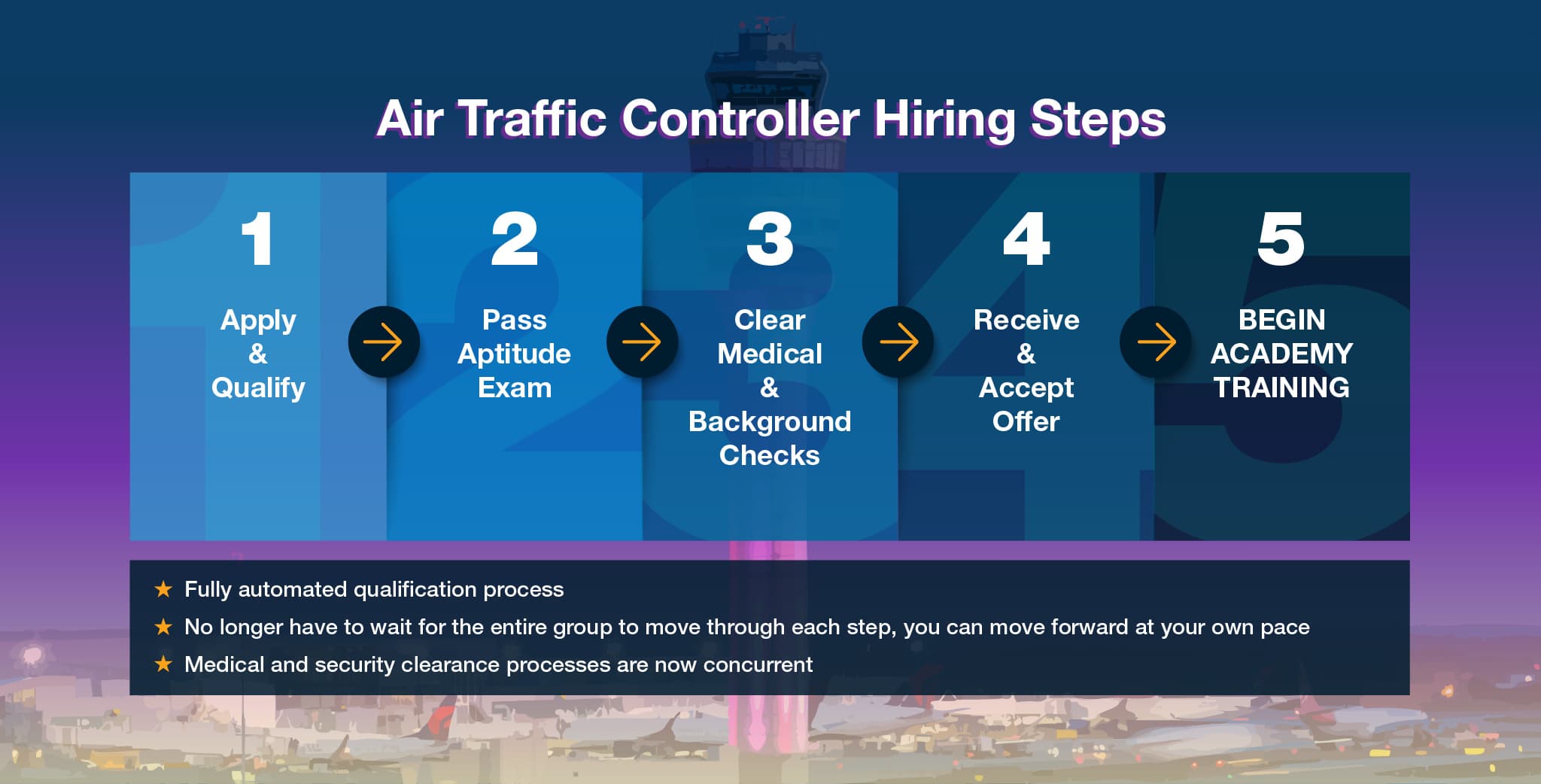
The Federal Aviation Administration's annual entry-level air traffic controller hiring window, which opened at midnight on April 17, 2026, closed once the agency received its capped total of 8,000 applications. Transportation Secretary Sean Duffy reported that 6,000 applications had arrived within the first 12 hours of the window opening.
The window is the primary — and typically sole — opportunity each year for candidates without prior controller experience to enter the federal pipeline. The FAA caps each window rather than leaving it open indefinitely, funneling applicants through the Air Traffic Skills Assessment (ATSA), a three-and-a-half-hour computer-based aptitude test.
Where the agency stands
The FAA's Workforce Plan 2026–2028, published on faa.gov, sets a target of hiring at least 8,900 new controllers through the end of fiscal year 2028. The FY2026 target is 2,200 new hires. As of April 2026, the agency had onboarded approximately 1,200 new controller trainees since October 1, 2025 — roughly 55 percent of the year's goal — with just under five months remaining in the fiscal year.
The agency reports approximately 11,000 Certified Professional Controllers (CPCs) on duty across more than 300 facilities, with an additional 4,000 trainees at various stages of Academy and on-the-job training. That total remains below 2015 staffing levels despite two consecutive years of elevated intake: the FAA hired more than 2,000 new controllers in FY2025, its highest intake since 2008.
The gamers campaign
The April 2026 hiring push is distinguished by an explicit recruitment campaign targeting video game players. Secretary Duffy and the FAA unveiled the campaign on or around the window's opening, featuring footage from popular game genres and messaging that tells prospective applicants they have "been training for this." The campaign was distributed via social media and included a Fortnite-style visual aesthetic and Xbox sound effects in promotional materials. Officials contend that multitasking, spatial awareness, sustained attention to multiple information streams, and rapid decision-making — skills developed through gaming — map directly onto ATC cognitive demands.
The campaign does not create a separate application pathway for gamers; all applicants sit the same ATSA and must meet the same eligibility criteria: U.S. citizenship, age under 31 at the close of the application window, and at least one year of full-time work experience or one year of higher education (or a qualifying combination).
Process and pay
The FAA reports it has reduced its hiring process from eight steps to five, cutting more than four months off the previous timeline from application to training offer. Candidates who score in the highest bands on the ATSA receive priority placement at the FAA Academy in Oklahoma City, where initial training runs approximately four to six months. On-the-job training at a facility then typically takes one to three additional years before a trainee achieves full performance level (FPL) certification.
Starting salaries for Academy trainees have increased roughly 30 percent under recent workforce initiatives. Average pay for fully certified professional controllers exceeds $150,000 per year, with higher figures at busy facilities due to locality pay and overtime.
Staffing pressure context
The hiring surge follows a period of documented staffing strain. The FAA imposed daily operation limits on Chicago O'Hare International Airport for the summer of 2026, capping operations at 2,708 per day from mid-May through late October — a reduction of roughly 300 flights on peak travel days. FAA Administrator Bryan Bedford attributed the cap to the need to "ensure airline schedules reflect what the system can safely handle."
The DOT also announced on May 15, 2026, an $835.8 million investment to replace eight air traffic control facilities and modernize 41 Federal Contract Towers, reflecting a parallel infrastructure effort alongside the hiring push.