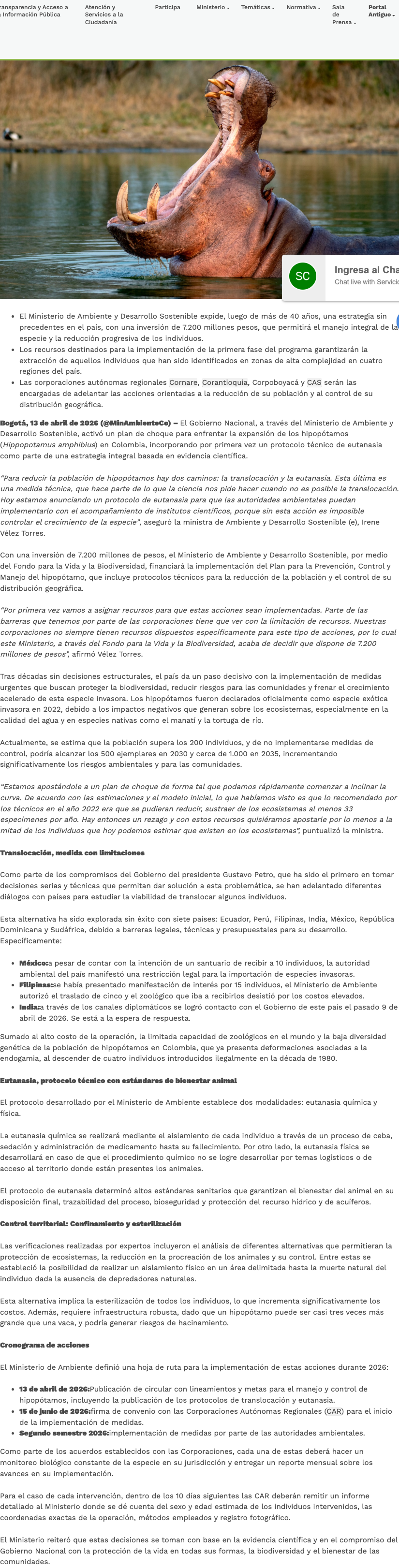
Colombia to Cull Up to 80 of Pablo Escobar's Hippos After Seven Countries Refuse Them
Colombia's Environment Ministry authorized the euthanasia of up to half of the country's 200+ hippo population, descended from four animals Pablo Escobar imported in the 1980s. Seven countries refused to accept the invasive animals.
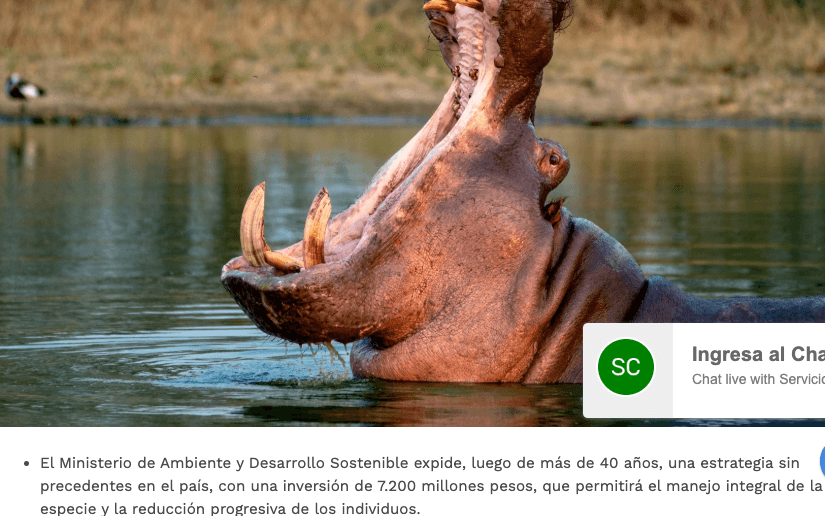
Colombia will euthanize up to 80 hippos descended from Pablo Escobar's private zoo after seven countries refused to accept the invasive animals, the Environment Ministry announced Sunday. It is the first time in over 40 years that the country has authorized lethal control of the population.
The herd, which now exceeds 200 individuals, traces back to four hippos the drug lord imported to his Hacienda Napoles estate in the Magdalena River valley during the 1980s. After Escobar was killed in 1993, the animals escaped and have been breeding unchecked in Colombian waterways ever since. Without intervention, the Environment Ministry projects the population will reach 500 by 2030 and nearly 1,000 by 2035.
"For reducing hippo populations, there are two paths: translocation and euthanasia," said Acting Environment Minister Irene Velez Torres. "This latter is a technical measure science demands when translocation isn't feasible."
Seven Countries Said No
Before authorizing the cull, Colombia approached seven countries to take the hippos: Ecuador, Peru, the Philippines, India, Mexico, the Dominican Republic, and South Africa. All declined or could not follow through.
Mexico came closest -- a sanctuary expressed interest in receiving 10 animals, but the country's environmental authority cited a legal restriction on importing invasive species. The Philippines initially showed interest in 15 hippos, and Colombia's Environment Ministry authorized the transfer of five, but the receiving zoo backed out due to the cost of transport and care. India was contacted as recently as April 9 and has not yet responded.
The failed translocation efforts, combined with the limited genetic diversity of the herd -- all 200+ animals descend from the original four, and some already show deformities linked to inbreeding -- led the government to approve euthanasia as the primary tool.
The Protocol
The ministry developed a two-track euthanasia protocol: chemical and physical. Chemical euthanasia involves isolating individual hippos through a feeding and sedation process, then administering lethal medication. Physical euthanasia -- essentially shooting -- serves as a backup when terrain or logistics prevent the chemical method.
The protocol establishes standards for animal welfare, biosecurity, and protection of waterways. Each operation must be documented within 10 days with a detailed report including the animal's sex, estimated age, GPS coordinates, methods used, and photographic evidence.
Four regional environmental corporations -- CORNARE, Corantioquia, Corpoboyaca, and CAS -- will carry out the operations, funded by 7.2 billion Colombian pesos (approximately $2 million) from the national Fund for Life and Biodiversity.
Why the Urgency
Colombia declared hippos an exotic invasive species in 2022. The animals, which can weigh over four tonnes, alter aquatic ecosystems, degrade water quality, and displace native species including manatees and river turtles. They also pose a direct physical danger to communities along the Magdalena River basin.
Previous control efforts centered on sterilization, but the ministry said the approach was prohibitively expensive and too slow to outpace the hippos' breeding rate. Confining the animals would require infrastructure designed for creatures nearly three times the size of cattle, raising further cost and logistical barriers.
Opposition
Senator Andrea Padilla, an animal rights activist who helped draft Colombia's law banning bullfighting, called the cull "cruel" and accused government officials of taking the easy way out. But the ministry maintained that the decision was grounded in scientific evidence and ecological necessity.
Implementation is set to begin in the second half of 2026, following a June 15 agreement with regional authorities. Monthly progress reports will be mandatory.