Webb Telescope Finds a 15-Jupiter-Mass World That Formed Like a Planet, Not a Star
NASA's JWST directly imaged exoplanet 29 Cygni b and found chemical evidence that it formed through accretion in a disk, not gravitational collapse. The finding redraws the boundary between planets and stars.
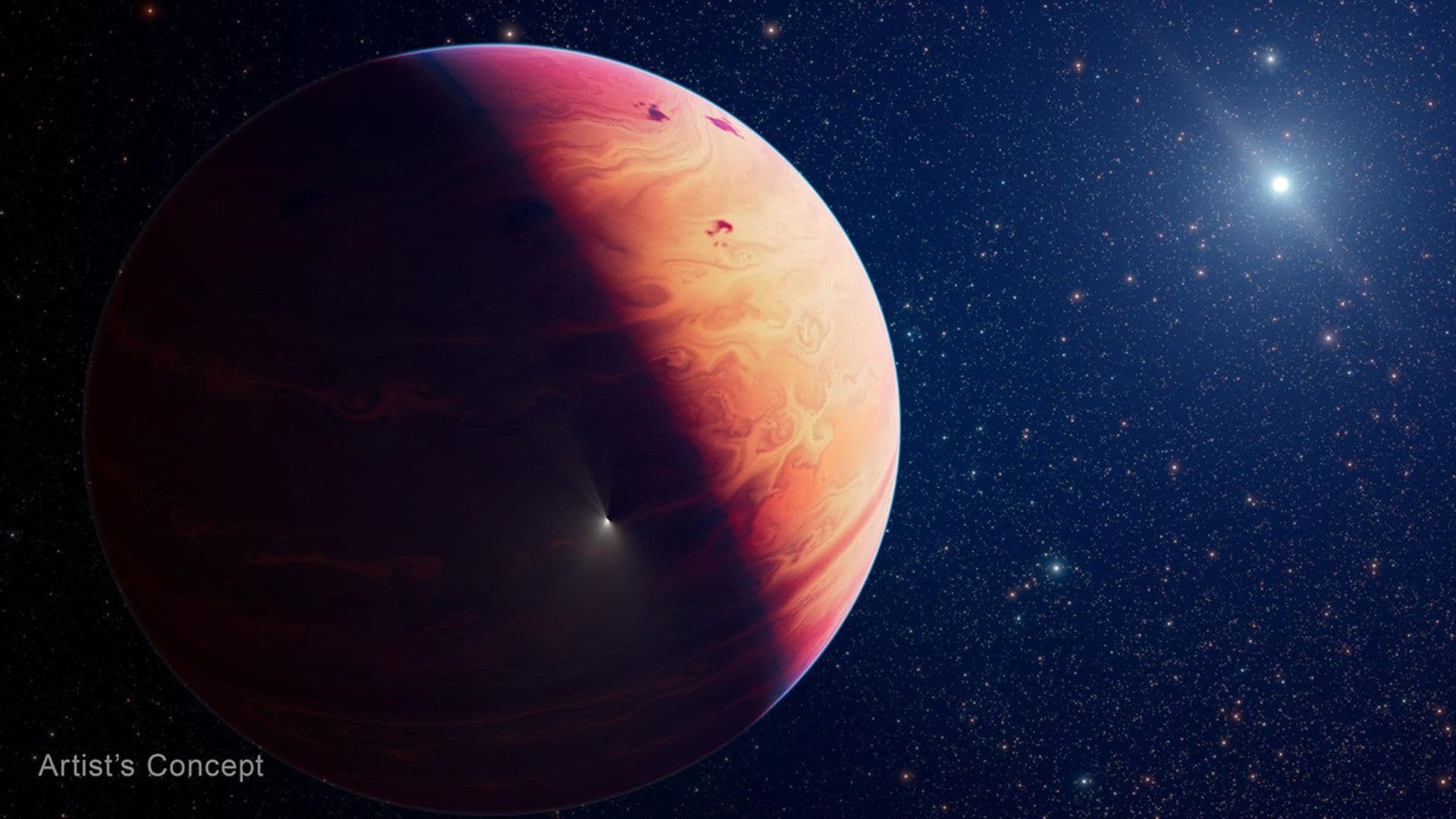
What makes something a planet instead of a star? The answer, it turns out, is not just mass -- it's how it was born.
NASA's James Webb Space Telescope directly imaged an exoplanet called 29 Cygni b and found chemical fingerprints that settle a longstanding question about objects on the boundary between planets and brown dwarfs. The results, published Monday in The Astrophysical Journal Letters, show that this gas giant -- 15 times more massive than Jupiter -- formed the same way planets in our solar system did, despite being heavy enough that it could have formed like a star.
Two Ways to Build a World
Planets form from the bottom up. Small bits of rock and ice clump together in a disk of gas and dust orbiting a young star, gradually building larger bodies that accrete gas and grow into worlds. This is called accretion.
Stars and brown dwarfs form from the top down. A massive cloud of gas collapses directly under its own gravity. This is called fragmentation.
The question has been: at what mass does the formation mechanism switch? Is a 15-Jupiter-mass object still a planet, or is it something else?
The Evidence
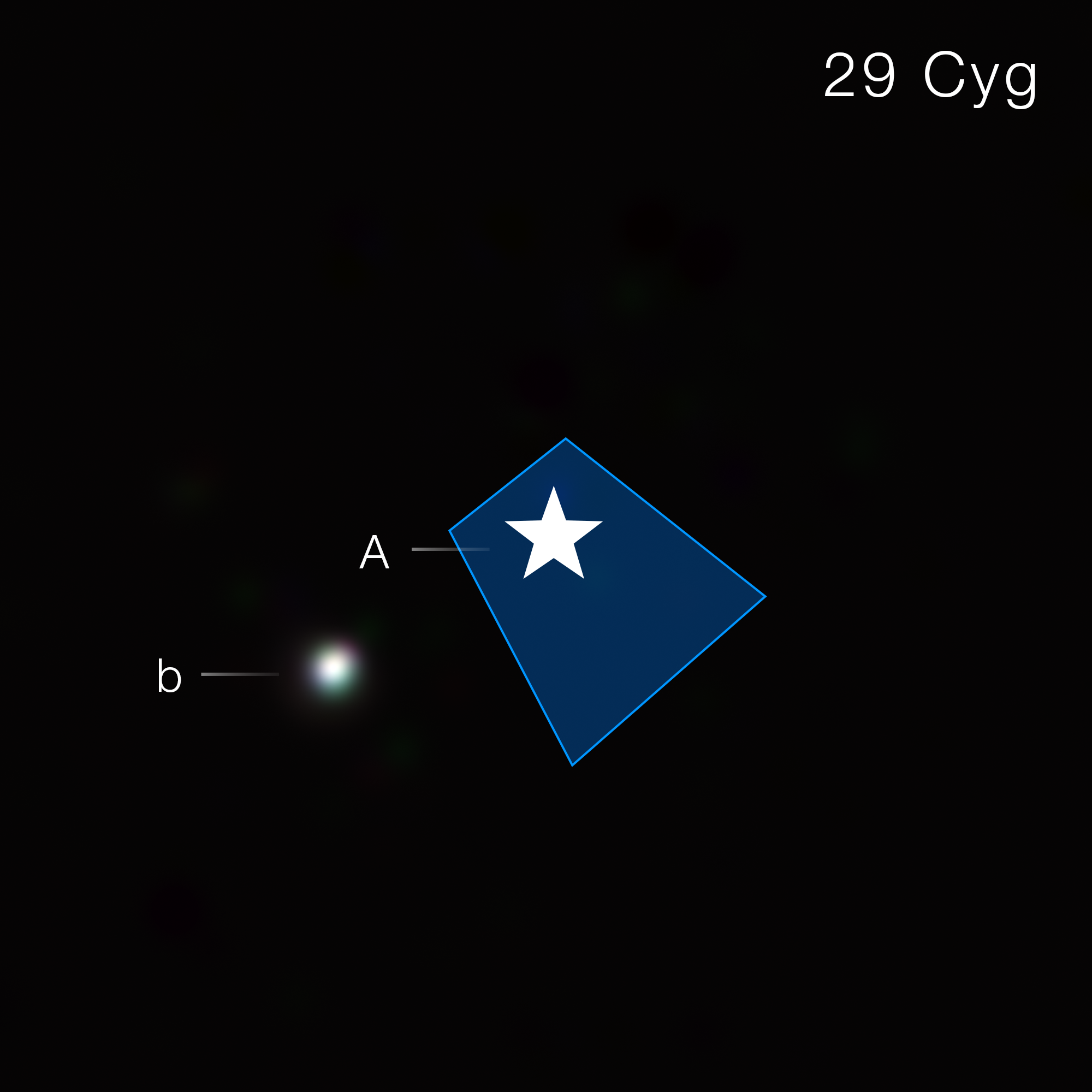
Using Webb's Near-Infrared Camera in coronagraphic mode -- blocking the host star's light to reveal the faint planet beside it -- astronomers detected carbon dioxide and carbon monoxide in 29 Cygni b's atmosphere. The chemical composition revealed that the planet is enriched in metals (elements heavier than hydrogen and helium) relative to its host star, containing roughly 150 Earth masses of metallic material.
This metal enrichment is the key signature. An object that formed by accretion in a disk picks up heavy elements from the rocky and icy material in that disk. An object that collapsed directly from a gas cloud would have the same chemical composition as its parent star.
"It formed like a planet and not like a star," said lead author William Balmer of Johns Hopkins University and the Space Telescope Science Institute.
Separate observations using the CHARA ground-based telescope array confirmed that the planet's orbit aligns with its star's rotation axis -- the same arrangement seen in our own solar system, and consistent with formation within a disk.
Why It Matters
29 Cygni b orbits its star at about 1.5 billion miles -- roughly the distance of Uranus from the Sun. At 15 Jupiter masses, it sits in a contested zone. Some astronomers would classify anything this heavy as a brown dwarf.
But the Webb data shows that mass alone doesn't determine what something is. Balmer noted that disk fragmentation tends to "run away to much higher masses," making 29 Cygni b "the lowest mass you could plausibly get" through that process. The chemical and orbital evidence points firmly toward planetary formation.
The finding suggests the planet-star boundary may need to be drawn not by mass, but by mechanism -- how an object came into being rather than how much it weighs.