Vance to lead highest-level US-Iran talks since 1979, with Witkoff and Kushner, in Islamabad this week
The vice president will head the American delegation at Pakistan-mediated peace talks aimed at converting a fragile two-week ceasefire into a permanent settlement. Iran is sending parliament speaker Qalibaf and Foreign Minister Araghchi.
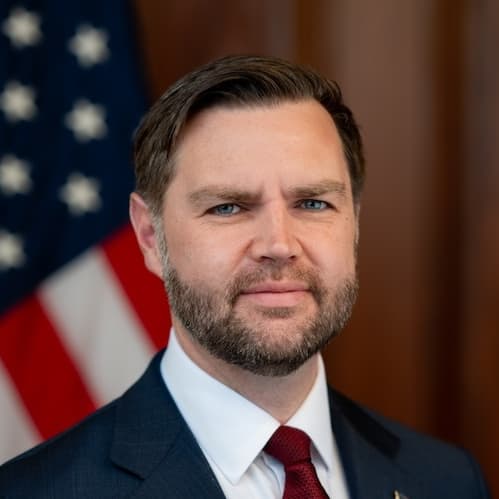
Vice President JD Vance will lead the US delegation at peace talks with Iran in Islamabad later this week, the White House announced Wednesday. Special envoy Steve Witkoff and Jared Kushner will join him.
The talks, mediated by Pakistan, represent the highest-level direct diplomatic contact between the United States and Iran since the 1979 Islamic Revolution. Iran's delegation will be led by parliament speaker Mohammad Baqer Qalibaf -- a former Revolutionary Guards commander -- alongside Foreign Minister Abbas Araghchi.
What they will negotiate
The framework is Pakistan's proposed "Islamabad Accord," a two-phase plan:
Phase 1: An immediate, verified cessation of hostilities and the reopening of the Strait of Hormuz to commercial shipping.
Phase 2: A three-week negotiation period covering the harder issues -- nuclear constraints, sanctions relief, and the status of Iranian military assets damaged during Operation Epic Fury.
The current two-week ceasefire, brokered by Pakistan late Tuesday, is the bridge to these talks. It was reached less than two hours before Trump's deadline for Iran to reopen the Strait of Hormuz.
The Lebanon dispute
A fault line has already emerged before negotiations begin. Pakistan's Prime Minister Shehbaz Sharif stated the ceasefire applies "everywhere" -- including Lebanon, where Israel has been conducting strikes against Hezbollah. Iran's negotiators share that interpretation.
Israel disagrees. It has continued aerial and ground operations in Lebanese territory, effectively rejecting the ceasefire's extension beyond the direct US-Iran theater. How the Islamabad talks handle this disconnect will shape whether any broader agreement holds.
Pakistan's role
Pakistan positioned itself as a neutral facilitator, not a pressure-applying intermediary. At an April 2 press briefing, a Foreign Ministry spokesperson said Pakistan would be "honored to host and facilitate meaningful talks between the two" but emphasized that "Iran is a sovereign country" whose decisions cannot be coerced.
Pakistan and China jointly announced a five-point peace framework including: immediate cessation of hostilities, resumption of negotiations respecting sovereignty, civilian protection under international humanitarian law, maritime shipping lane security through the Strait of Hormuz, and UN Charter primacy.
Saudi Arabia, Turkey, Egypt, and Qatar have expressed support for the initiative. Their foreign ministers met in Islamabad in recent weeks to coordinate.
The stakes
The conflict began when Israel and the US struck Iran on February 28, killing its supreme leader. Iran retaliated with missile and drone attacks across the region. Over 1,900 Iranians have died, according to Pakistan's account of a March 28 call between PM Shehbaz and Iranian President Pezeshkian.
The economic toll extends well beyond the region. The Strait of Hormuz closure pushed crude oil past $113 a barrel and drove gasoline prices above $4.25 in the US. Eurozone inflation surged to 2.5% in March, entirely driven by energy costs.
If the talks fail, the two-week ceasefire expires and the war resumes -- with no obvious off-ramp.