Trump Administration Agrees to Permanently Restore Pride Flag at Stonewall After Lawsuit Settlement
The National Park Service must rehang the Pride flag at the Stonewall National Monument within seven days and maintain it permanently under a court-enforceable settlement. The government removed the flag in February, prompting a lawsuit that argued it qualified under the government's own historical-context exemption.
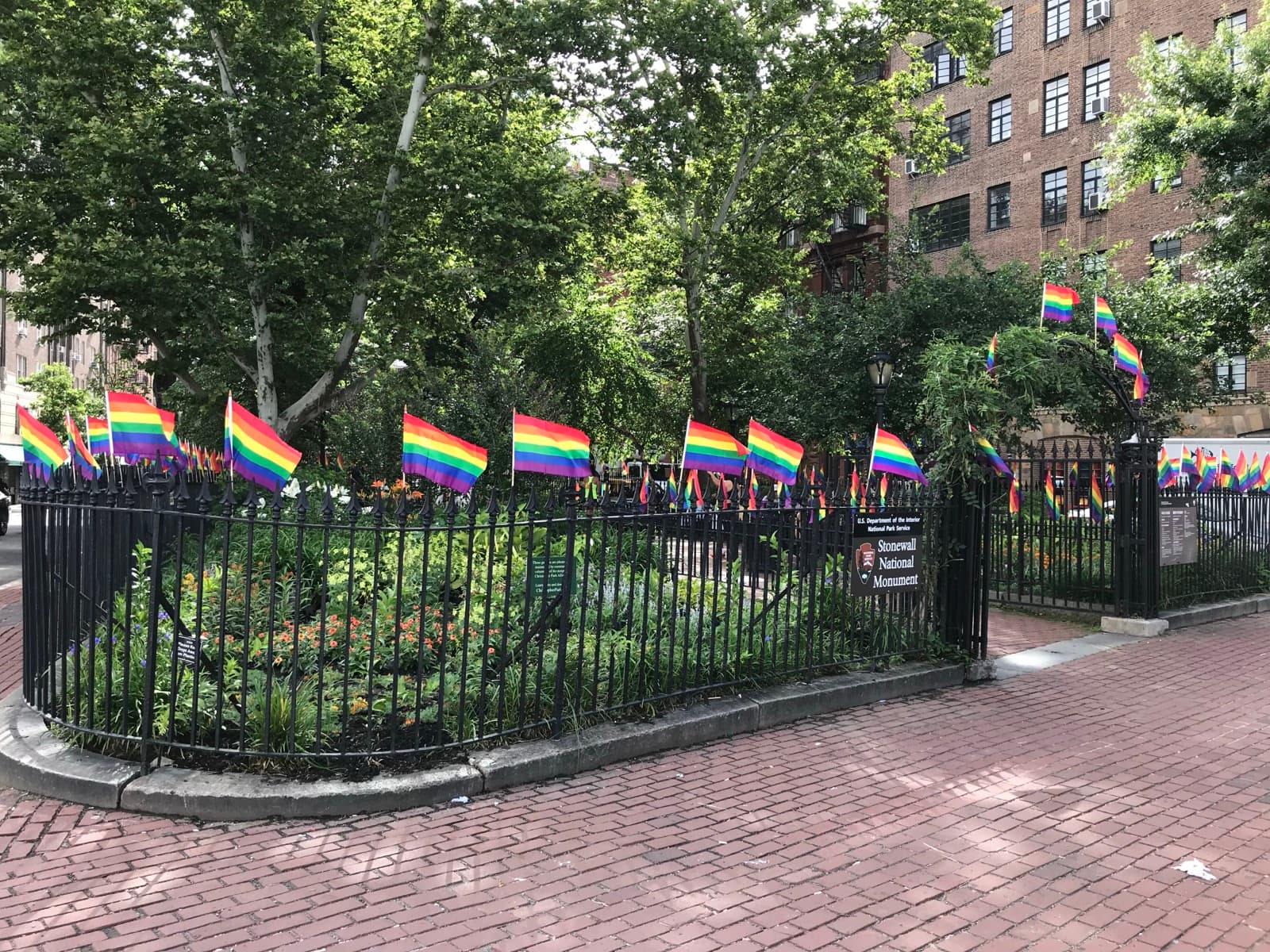
The Trump administration has agreed to permanently restore the Pride flag at the Stonewall National Monument in New York City, settling a lawsuit that challenged the flag's removal earlier this year.
Under the court-enforceable settlement announced April 13, the National Park Service must rehang the Pride flag on the monument's official flagpole within seven days and maintain it permanently alongside the American flag and the NPS flag. The court retains jurisdiction to enforce compliance.
The removal and the legal argument
The federal government removed the Pride flag from the Stonewall National Monument in February 2026. Eight days later, Lambda Legal and the Washington Litigation Group filed suit on behalf of the Gilbert Baker Foundation, Village Preservation, and Equality New York.
The legal argument was precise: the government's own flag policy includes an exemption for flags that provide historical context at federal sites. The Stonewall National Monument -- the first national monument dedicated to LGBTQ+ rights and history, designated in 2016 -- exists specifically because of that history. A Pride flag at Stonewall isn't a political statement; under the government's own rules, it's historical context.
"The sudden, arbitrary removal was yet another act targeting the LGBTQ+ community," said Karen Loewy of Lambda Legal, who served as lead counsel.
What the settlement requires
The government acknowledged in the settlement that the Pride flag complies with federal flag policy. This concession matters beyond Stonewall: it establishes that the historical-context exemption applies to LGBTQ+ history, making it harder for future administrations to remove similar displays at other federal sites without contradicting the legal record.
The settlement is court-enforceable, meaning Lambda Legal can return to the court if the government fails to comply -- a stronger remedy than a voluntary policy reversal.
The monument
The Stonewall National Monument encompasses Christopher Park in Greenwich Village, directly across from the Stonewall Inn. The Stonewall uprising on June 28, 1969 -- when patrons resisted a police raid on the bar -- became a catalyst for the modern LGBTQ+ rights movement. President Obama designated the site as a national monument in 2016. The Pride flag designed by Gilbert Baker, one of the plaintiffs' namesakes, first flew at the 1978 San Francisco Gay Freedom Day Parade.