Carfentanil Deaths Jumped Sevenfold Between 2023 and 2024, CDC Reports
A CDC MMWR analysis documented a sevenfold increase in US overdose deaths involving carfentanil — a synthetic opioid 100 times more potent than fentanyl — from 29 in the first half of 2023 to 238 in the first half of 2024. DEA labs tested more carfentanil-adulterated material in 2024 than in the three previous years combined.
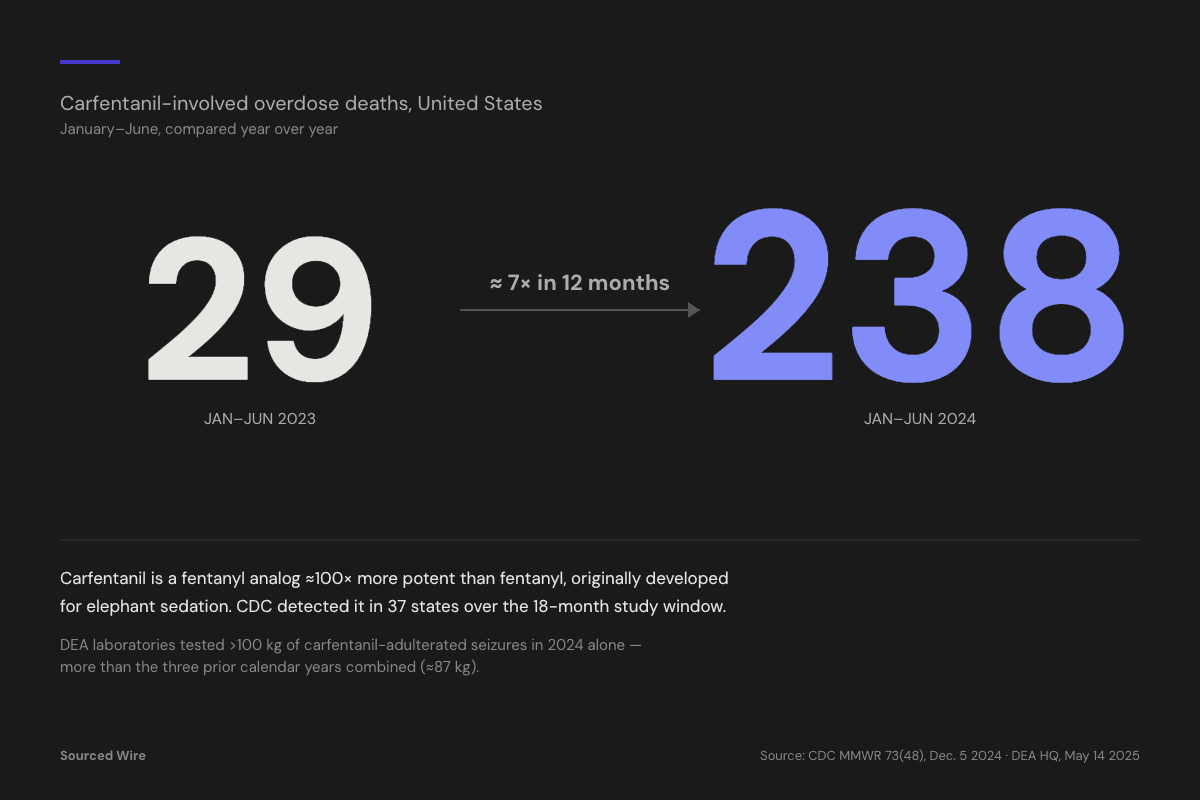
Carfentanil — a fentanyl analog originally developed to tranquilize elephants — is surging in the US illicit drug supply, according to federal data published by the CDC and DEA.
A Morbidity and Mortality Weekly Report analysis released December 5, 2024 by the CDC Division of Overdose Prevention found that overdose deaths involving carfentanil rose approximately sevenfold in one year. The DEA followed in May 2025 with a public briefing noting that its laboratories tested more than 100 kilograms of carfentanil-containing seizures in calendar 2024 — exceeding the combined total of the three previous years.
The death data
| Period | Overdose deaths with carfentanil detected |
|---|---|
| January–June 2023 | 29 |
| January–June 2024 | 238 |
The MMWR drew on CDC's State Unintentional Drug Overdose Reporting System, covering 45 states and the District of Columbia for the trend period and 49 states plus DC for state-level carfentanil detection during January 2023–June 2024. Carfentanil was detected in 37 states over that window.
About 87% of carfentanil-involved deaths had illegally manufactured fentanyls co-detected — markedly different from the 2016–2017 carfentanil outbreak, in which fewer than 25% of deaths involved fentanyl co-detection and geographic exposure was more localized.
The seizure data
DEA laboratory intake in calendar year 2024 for material containing carfentanil exceeded 100 kilograms, according to the agency's May 2025 analysis. The three prior calendar years (2021–2023) combined to approximately 87 kilograms. The form of the seizures also changed: most 2024 seizures were in pressed-pill or tablet form rather than the powder form typical of earlier waves. Counterfeit M30 oxycodone tablets containing carfentanil were among the products the DEA warned consumers about through 2025 field-division press releases.
A single November 2025 DEA operation in Los Angeles County netted approximately 628,000 carfentanil pills from one trafficker.
What makes carfentanil different
Carfentanil is estimated to be 10,000 times more potent than morphine and 100 times more potent than fentanyl, according to the DEA. It is not approved for human medical use. Its original veterinary application — sedating large animals — reflects the dose scale at which it operates in the body.
Naloxone, the standard emergency antidote for opioid overdoses, may require multiple high doses to reverse a carfentanil overdose, and effective reversal is not guaranteed even then, per the DEA briefing.
Context
Overall US drug overdose deaths declined in 2024 for the first time since 2018 — CDC provisional data show an almost 27% decline compared to 2023. The MMWR carfentanil finding does not contradict that headline trend; it describes a pocket inside the declining fentanyl-involved death population where a particular, more potent adulterant is spreading geographically at a time when overall IMF-involved death rates are edging down in three of four Census regions. The West is the exception, where the share of overdose deaths involving illegally manufactured fentanyls rose from 48.5% (first quarter 2021) to 66.5% (second quarter 2024).
Prior carfentanil surges documented by the CDC occurred in 2016–2017 (centered in Florida and the Midwest) and in 2019–2020. The current wave is the first in which the majority of seized carfentanil is appearing in pill form disguised as prescription medications.