NASA cargo ship arrives at space station carrying quantum research module and stem cell experiments
Northrop Grumman's Cygnus XL delivered 11,000 pounds of experiments to the ISS on April 13, including hardware to advance quantum computing, grow therapeutic stem cells in microgravity, and improve space weather forecasting.
Northrop Grumman's Cygnus XL cargo spacecraft arrived at the International Space Station on April 13, carrying approximately 11,000 pounds of scientific experiments and supplies. NASA astronauts Jack Hathaway and Chris Williams captured the spacecraft using the station's Canadarm2 robotic arm and berthed it at the Unity module's Earth-facing port.
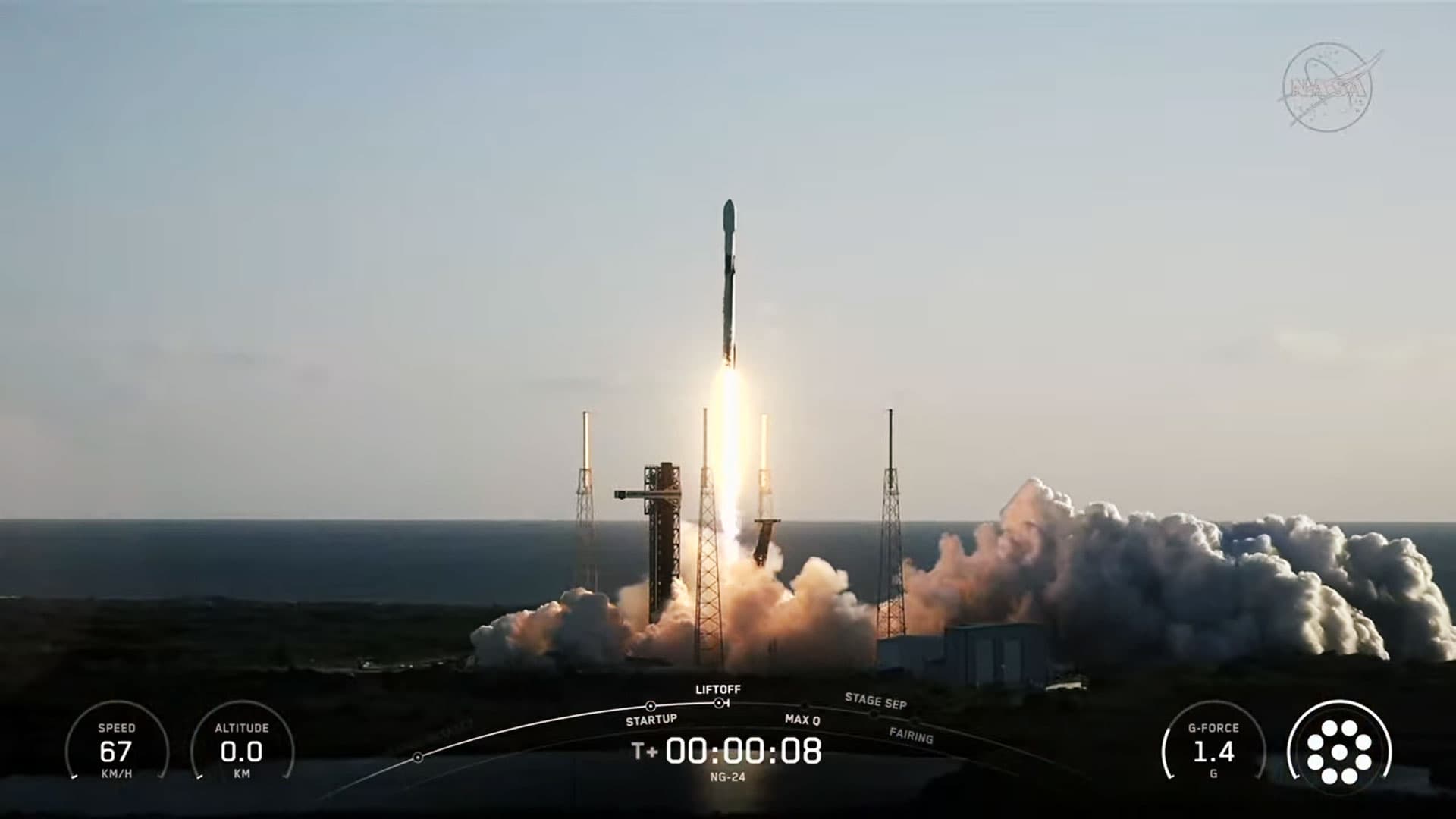
The spacecraft, named the S.S. Steven R. Nagel after the former NASA astronaut who flew four shuttle missions and logged 723 hours in space, launched aboard a SpaceX Falcon 9 from Cape Canaveral Space Force Station on April 11 at 7:41 a.m. EDT. It is the second flight of the Cygnus XL, the larger version of Northrop Grumman's solar-powered cargo vehicle.
What's aboard
The mission's most significant payload is a new Cold Atom Lab module that expands the station's quantum research capabilities. The module advances work on general relativity, planetary composition, and dark matter detection. NASA says the research could improve technologies including solar cells, MRI scanners, and the components that power phones and computers.
Also aboard is InSPA-StemCellEX-H2, hardware designed to produce therapeutic blood stem cells in microgravity. The experiment aims to generate larger quantities of stem cells than Earth-based methods allow, with applications for patients with blood diseases and cancers.
Two other experiments round out the science payload:
| Experiment | Purpose |
|---|---|
| Nanoracks-ITSI | Measures how radio signals change as they pass through Earth's upper atmosphere, improving models that predict solar activity impacts on GPS navigation and radar tracking |
| CBIOMES | Studies how spaceflight affects gut microbiome stability using roundworms, generating data for protecting astronaut health on Moon and Mars missions |
The mission also delivered the European Enhanced Exploration Exercise Device, developed jointly by NASA and the European Space Agency. It combines cycling, rowing, resistance training, and rope climbing into a single piece of equipment designed to preserve muscle and bone health in microgravity.
What happens next
Cygnus XL will remain attached to the station until October 2026. When it departs, it will carry thousands of pounds of station trash and burn up during reentry into Earth's atmosphere.
The CRS-24 mission is part of NASA's commercial resupply program, which contracts private companies to deliver cargo to the station. The experiments aboard will support research during Expeditions 74 and 75.