Young Sun-Like Stars Calm Down 15 Times Faster Than Predicted, and That May Be Why Earth Is Habitable
A new Chandra X-ray Observatory study of eight star clusters finds that adolescent Sun-like stars shed their planet-sterilizing X-ray output far more rapidly than models predicted -- narrowing the window during which high-energy radiation can strip young planets of their atmospheres.

Stars like our Sun spend their youth blasting their surroundings with X-rays -- radiation intense enough to strip atmospheres off orbiting planets and prevent organic molecules from forming. But a new study using NASA's Chandra X-ray Observatory has found that Sun-like stars shed that destructive output 15 times faster than astrophysicists had predicted, dramatically shortening the period during which young planets are most vulnerable.
The finding, published April 14 in The Astrophysical Journal, suggests that conditions favorable to life may develop around Sun-like stars far earlier than previously thought -- including around our own Sun, roughly 4.6 billion years ago.
The Finding
A team led by Konstantin Getman at Penn State University studied eight stellar clusters ranging from 45 million to 750 million years old. They compared Chandra X-ray observations of these clusters against standard models that predict how stellar X-ray output should decline with age.
The gap was stark. The young stars emitted only one-quarter to one-third of the X-rays the models predicted.
"This is not because an outside force is consuming their light, but because their internal generation of magnetic fields becomes less efficient," Getman said.
To put the numbers in context:
| Star age | X-ray output vs. today's Sun |
|---|---|
| 3 million years | ~1,000x brighter |
| 100 million years | ~40x brighter |
| 750 million years | approaching modern levels |
The drop from 1,000x to 40x happens far faster than previous models suggested -- compressing into a few hundred million years what was thought to take much longer.
Why It Matters for Habitability
High-energy X-rays from young stars erode planetary atmospheres. A planet orbiting a star that stays X-ray-active for a billion years has a much harder time holding onto its atmosphere -- and with it, any chance of surface water or organic chemistry.
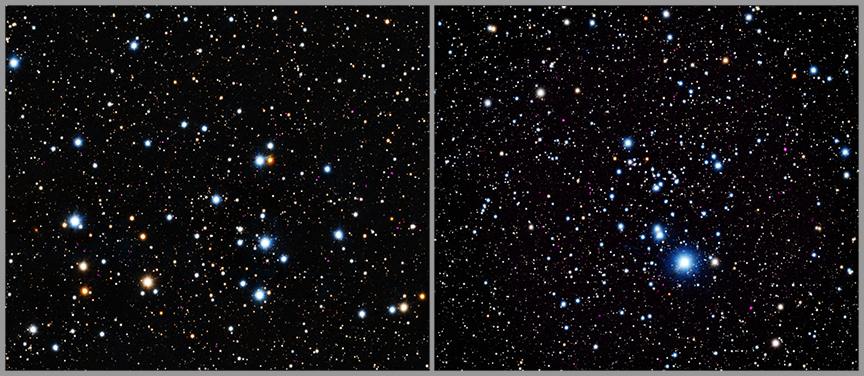
The faster dimming timeline means the window of maximum atmospheric erosion is shorter. Planets around Sun-like stars get a reprieve earlier, improving the odds that atmospheres survive long enough for chemistry to take hold.
The researchers also found that X-ray energies soften as they decline -- the radiation becomes less penetrating over time, not just weaker. Combined with the disappearance of energetic particles, this means the overall assault on young planetary atmospheres is even less severe than the luminosity drop alone would suggest.
"This real-world dimming echoes the dramatic stellar change in fiction, but it may be even more fascinating because it highlights our own Sun's actual history," said co-author Vladimir Airapetian of NASA's Goddard Space Flight Center.
An Important Caveat: Mass Matters
The rapid dimming applies specifically to stars with roughly the Sun's mass. Lower-mass stars -- red dwarfs, which are the most common type in the galaxy and the primary targets of exoplanet habitability research -- behave differently. They maintain high X-ray emission for much longer, potentially billions of years.
This creates a split picture for habitability. Planets around Sun-like stars may be better candidates for life than previously modeled. But planets around red dwarfs, including the much-studied TRAPPIST-1 system, face a longer gauntlet of high-energy radiation.
The Method
The team made new Chandra observations of five younger clusters (ages 45-100 million years) and combined them with archival Chandra and ROSAT data from three older clusters (220-750 million years). ESA's Gaia satellite provided precise distance measurements to calibrate the X-ray luminosities.
"By studying X-rays from stars that are hundreds of millions of years old, we have filled in a large gap in our understanding of their evolution," said co-author Eric Feigelson of Penn State.
The Paper
Getman, K.V., Feigelson, E.D., Airapetian, V.S., & Garmire, G.P. "X-ray Evolution of Young Stars: Early Dimming and Coronal Softening in Solar-Mass Stars with Implications for Planetary Atmospheres." The Astrophysical Journal, April 14, 2026. DOI: 10.3847/1538-4357/ae2e00