U.S. Approves $930 Million HIMARS Sale to Sweden, Arming NATO's Newest Member With Ukraine War's Signature Weapon
The State Department cleared a $930 million package of 20 M142 HIMARS launchers, guided rockets, and tactical missiles for Sweden -- the country's first purchase of the system that redefined NATO precision fires in Ukraine.
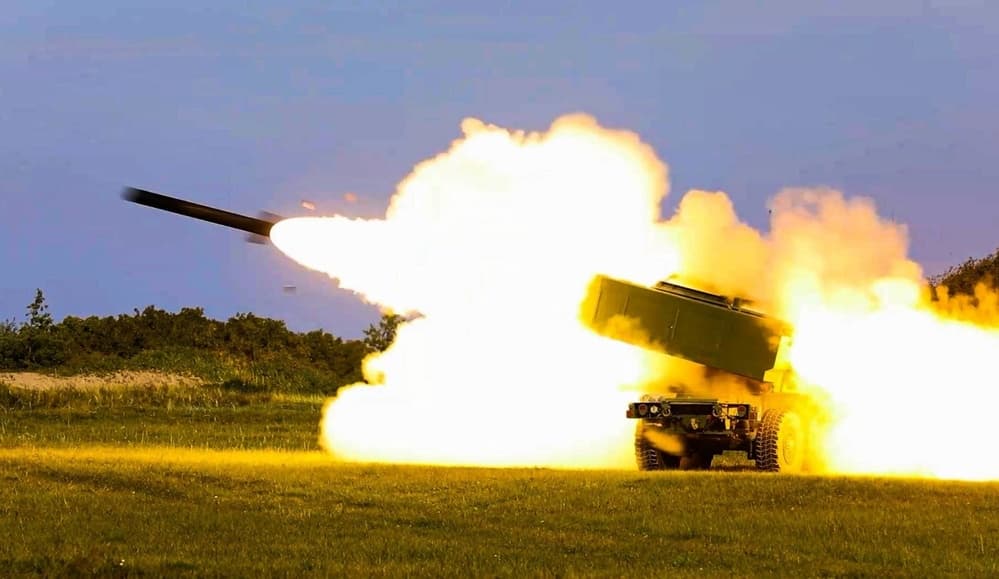
The U.S. State Department has approved the sale of 20 M142 High Mobility Artillery Rocket Systems and a full suite of guided munitions to Sweden in a deal worth an estimated $930 million, according to a notification published in the Federal Register on April 14.
The package arms Sweden -- which ended two centuries of military non-alignment when it joined NATO on March 7, 2024 -- with the same weapon system that Ukrainian forces used to devastating effect against Russian logistics hubs, command posts, and ammunition depots throughout the war.
The Package
Sweden's request, delivered to Congress on March 10, covers both launchers and a deep magazine of precision-guided munitions:
| Item | Quantity | Role |
|---|---|---|
| M142 HIMARS launchers | 20 | Mobile rocket artillery platform |
| M31A2 GMLRS unitary pods | 35 | Precision strike, single warhead |
| M30A2 GMLRS alternative warhead pods | 35 | Area effect, anti-personnel |
| M403 ER GMLRS alternative warhead pods | 35 | Extended range (~150 km), area effect |
| M404 ER GMLRS unitary pods | 35 | Extended range (~150 km), precision strike |
| M57 ATACMS pods | 20 | Tactical ballistic missile (~300 km range) |
| IFATDS fire control systems | 24 | Digital fire coordination |
The deal also includes radios, GPS receivers, cryptographic devices, training, and logistics support. Lockheed Martin in Grand Prairie, Texas is the prime contractor.
The total breaks down to $770 million in major defense equipment and $160 million in support and services.
What Sweden Gets -- and What It Doesn't
The inclusion of extended-range GMLRS variants gives Sweden a 150-kilometer precision strike envelope -- enough to threaten staging areas, air defense batteries, and command nodes deep behind a front line. The 20 ATACMS pods push that range past 300 kilometers.
But the package conspicuously excludes the Precision Strike Missile (PrSM), Lockheed Martin's next-generation munition with a range exceeding 500 kilometers. The U.S. has been selective about PrSM exports, and its absence means Sweden's HIMARS will not reach the deepest strike tier that newer NATO members have sought.
Why It Matters
Sweden's accession to NATO added 2,000 kilometers of Baltic coastline and the strategically critical island of Gotland to the Alliance's defense perimeter. But political membership without matching combat capability is a formality. This sale converts it into operational weight.
The 20 HIMARS launchers, paired with 24 fire control systems, give Sweden the infrastructure for integrated, networked fires -- the ability to coordinate strikes with allied artillery across Northern Europe in real time. The State Department framed the sale as improving "the security of a NATO Ally that is a force for political stability and economic progress in Europe" and noted "no adverse impact on U.S. defense readiness."
For NATO's northern flank, the math is straightforward. Finland, which joined NATO in April 2023, is already operating HIMARS. Estonia signed for additional launchers in April 2026. Sweden's 20 systems create a continuous belt of precision rocket artillery from the Baltic to the Arctic -- a capability that did not exist three years ago.
What's Next
Congress received the notification on March 10 and has 30 days to block the sale through a joint resolution of disapproval. No such effort has materialized. Once the review period closes, the Defense Security Cooperation Agency can proceed with contract execution.
Delivery timelines for HIMARS have stretched as Lockheed Martin juggles orders from over a dozen countries alongside U.S. Army replenishment demands. Sweden's 20 launchers will enter a production queue that the Pentagon has been working to accelerate since 2022.