Cuba's Diaz-Canel Warns of Guerrilla War in First US TV Interview Since Castro
In his first American television interview -- the first by a Cuban leader since Fidel Castro in 1959 -- President Miguel Diaz-Canel told NBC he would die before stepping down and warned the U.S. of guerrilla warfare if Cuba is attacked.
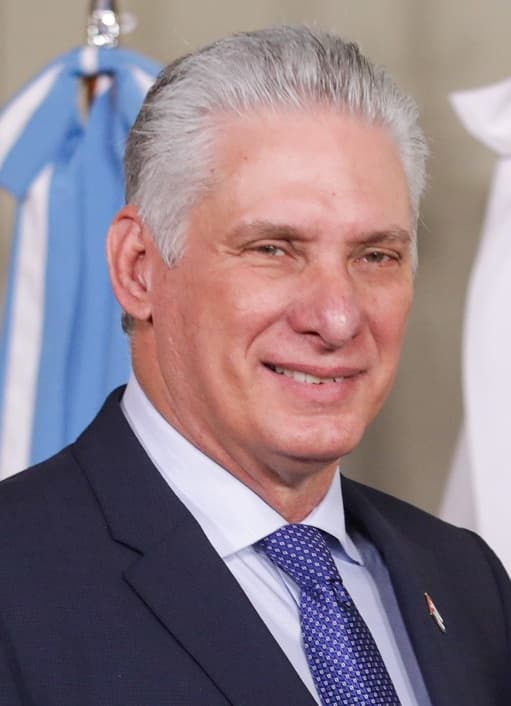
"I have no fear. I am willing to give my life for the revolution."
Cuban President Miguel Diaz-Canel, in an interview aired on NBC's Meet the Press on April 12, became the first Cuban leader to appear on American television since Fidel Castro sat for the same program in 1959. Interviewed at Havana's Jose Marti Memorial by Kristen Welker, Diaz-Canel warned that any U.S. military action against Cuba would be met with the country's "war of all the people" doctrine -- a guerrilla strategy built on broad civilian participation.
"If military aggression occurs, we will fight back, we will battle, we will defend ourselves."
Asked whether he would step down to prevent conflict, Diaz-Canel was unequivocal: "The concept of revolutionaries giving up and stepping down -- it's not part of our vocabulary." He invoked Cuba's national anthem: "Dying for the homeland is to live."
The U.S. threat declaration
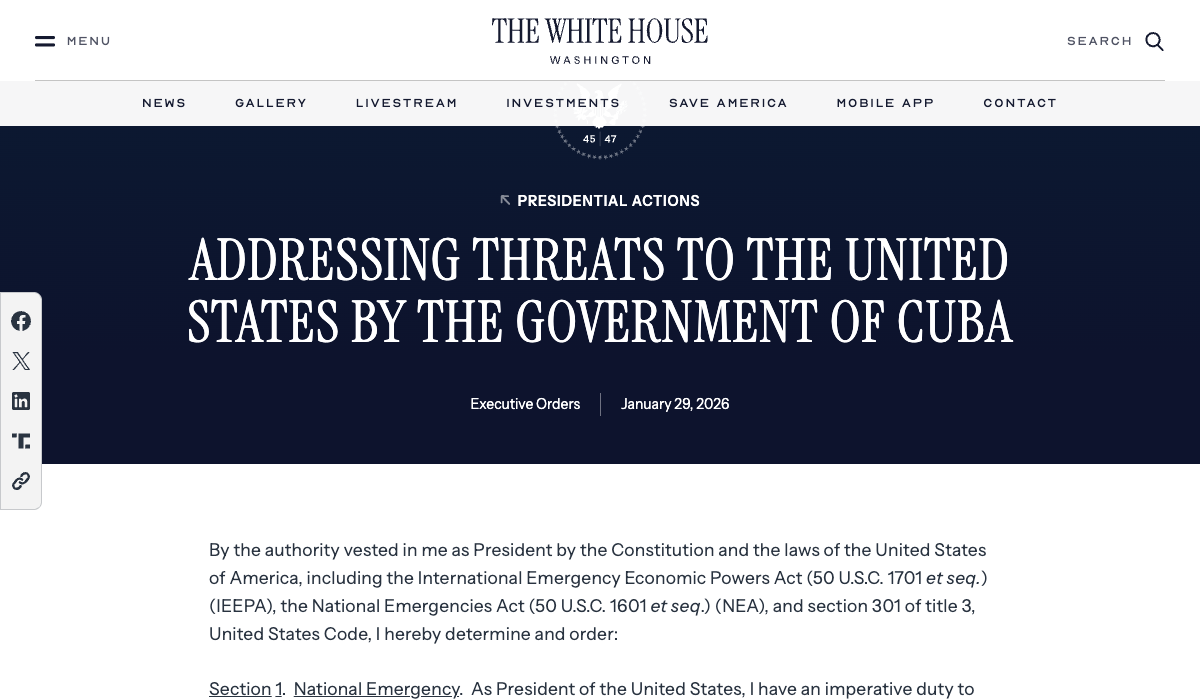
The interview comes after President Trump signed an executive order on January 29 declaring Cuba "an unusual and extraordinary threat" to U.S. national security under the International Emergency Economic Powers Act. The order accused Havana of:
- Aligning with Russia, China, and Iran
- Hosting "Russia's largest overseas signals intelligence facility"
- Welcoming "transnational terrorist groups, such as Hezbollah and Hamas"
- Providing "defense, intelligence, and security assistance to adversaries in the Western Hemisphere"
Trump has separately said he thinks he will have the "honor" of "taking Cuba in some form," telling reporters he can "do anything I want with it." The executive order also authorized tariffs on any country that sells oil to Cuba -- an energy blockade that has compounded Cuba's existing power crisis, with daily blackouts across the island.
Cuba's rebuttal
Cuba has rejected every charge. In a statement published by Granma, Cuba's official state newspaper, Diaz-Canel stated: "Cuba does not pose a threat to the United States, and much less an extraordinary and unusual threat."
He pointed to decades of American pressure: "For 67 years there has existed a policy of hostility, aggression, and threats, a policy of blockade, intensified blockade, and now an energy blockade."
The diplomatic offer
Despite the confrontational tone, Diaz-Canel stressed Cuba's willingness to negotiate. "Dialogue and deals with the U.S. government are possible, but they're difficult," he told NBC, adding that Washington negotiates while simultaneously attacking other nations, creating "a lot of distrust."
He proposed cooperation on migration, security, the environment, science, trade, education, culture, and sports -- areas where Cuba says it has honored agreements while the U.S. has not.
What he denied
Asked about approximately 1,200 political prisoners held in Cuba, Diaz-Canel rejected the characterization, claiming opponents "manifest themselves on a daily basis against the revolution and they're not in prison."