Magyar's Tisza Party Wins Supermajority in Hungary, Ending Orbán's 16-Year Rule
Péter Magyar's centre-right Tisza party won 138 of 199 seats on record 79.5% turnout, giving him the constitutional supermajority to dismantle Orbán's system. The longtime prime minister conceded defeat, calling the result 'painful but clear.'
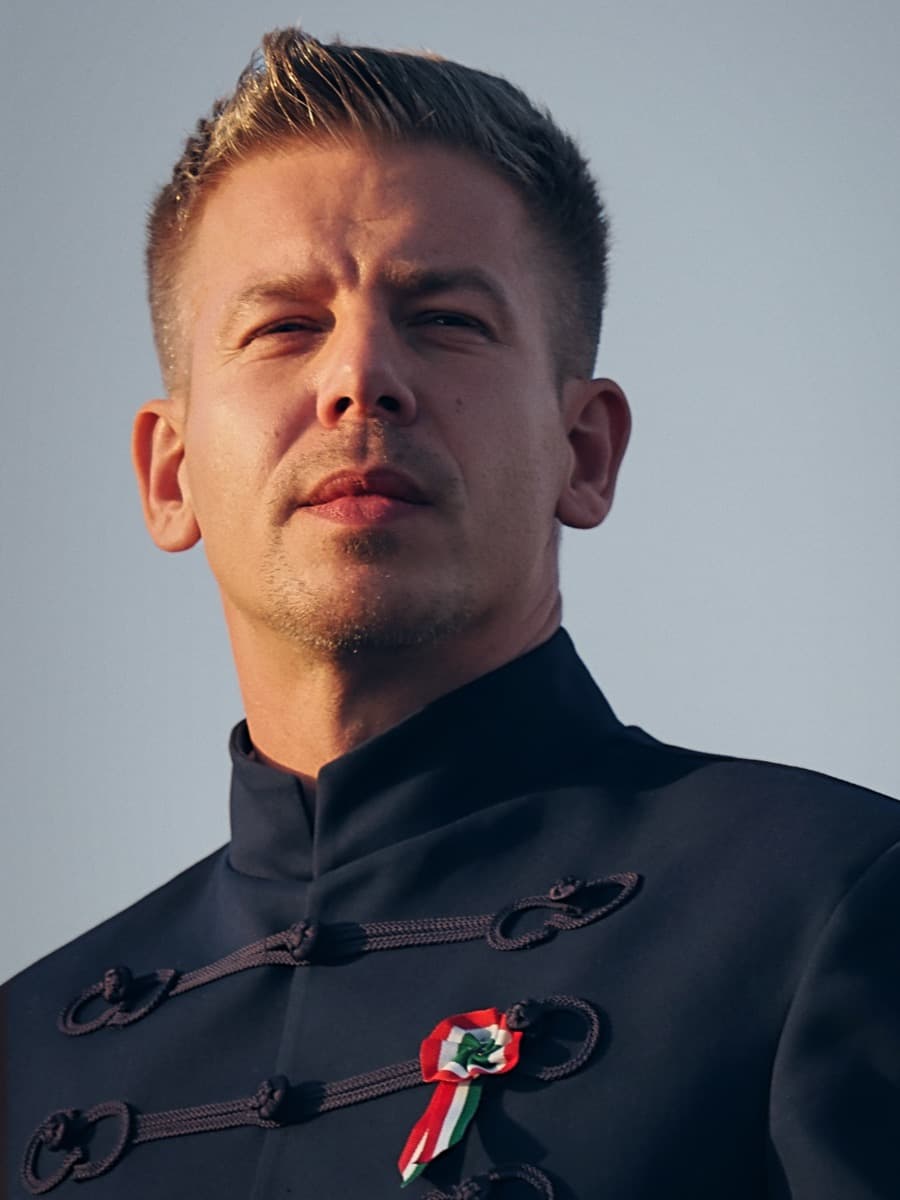
Viktor Orbán's 16-year hold on Hungary ended on Sunday night when Péter Magyar's Tisza party swept to a constitutional supermajority, taking 138 of 199 seats in the National Assembly.
"Tonight, truth prevailed over lies," Magyar told tens of thousands of supporters gathered along the Danube in Budapest. "All Hungarians know that this is a shared victory. Our homeland made up its mind. It wants to live again. It wants to be a European country."
Results
With 97.35% of precincts counted:
| Party | Vote share | Seats | Change from 2022 |
|---|---|---|---|
| Tisza | 53.33% (3,095,606) | 138 | +81* |
| Fidesz-KDNP | 38.13% (2,213,365) | 55 | -80 |
| Mi Hazánk | 5.86% (340,065) | 6 | -1 |
*Tisza is the successor to the fragmented United Opposition, which won 57 seats in 2022.
Turnout reached 79.51% -- a record in Hungary's post-Communist history, nearly 10 percentage points above 2022.
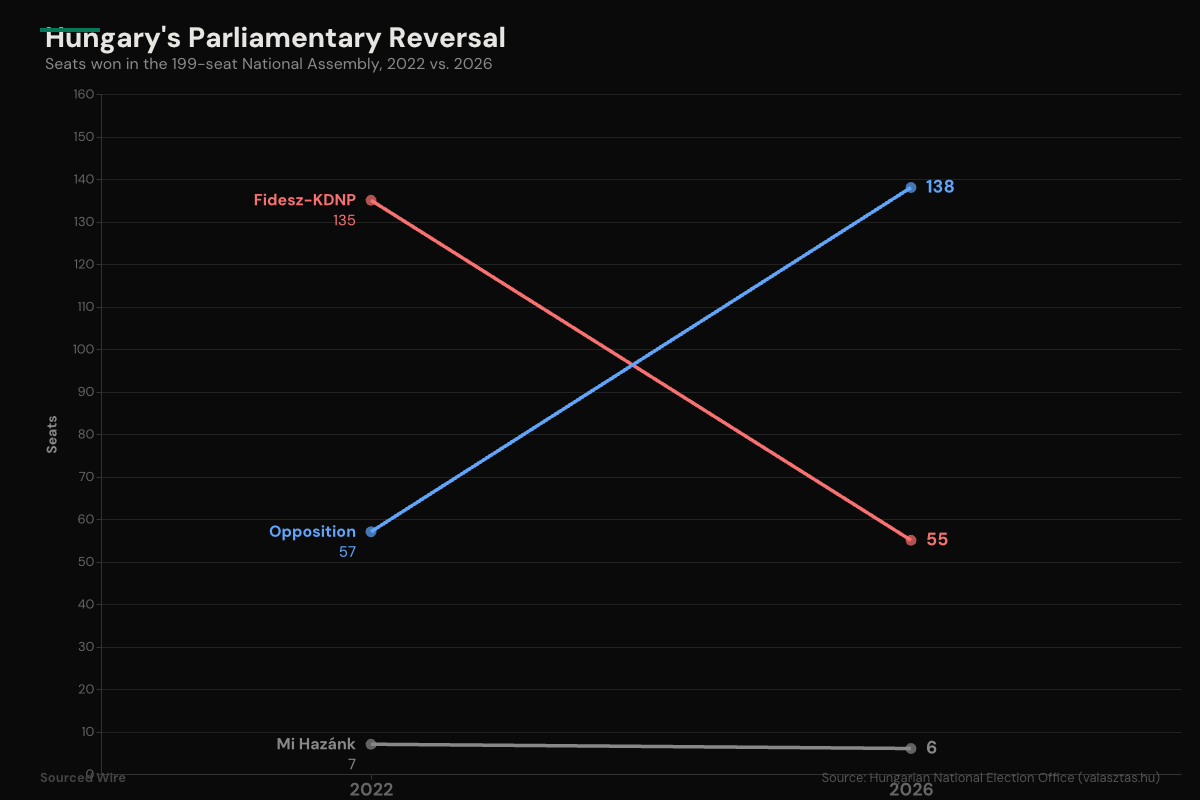
The Swing
The numbers are an almost perfect mirror image of 2022, when Fidesz held 135 seats to the opposition's 57. Magyar flipped 80 seats in a single cycle.
The supermajority threshold in Hungary is 133 seats -- two-thirds of the assembly. By crossing it, Magyar gained the power to amend Hungary's constitution and dismantle the institutional framework Fidesz built over 16 years: control over the judiciary, state-owned enterprises, and much of the media.
"Never in the history of democratic Hungary have so many people voted," Magyar said, "and no other party has ever received such a big mandate."
Orbán Concedes
At Fidesz party headquarters, Orbán acknowledged defeat. "The result is painful, but the result is clear," he said, adding that he had congratulated the winning party.
"Whatever happens, we will serve our country and the Hungarian nation from opposition as well."
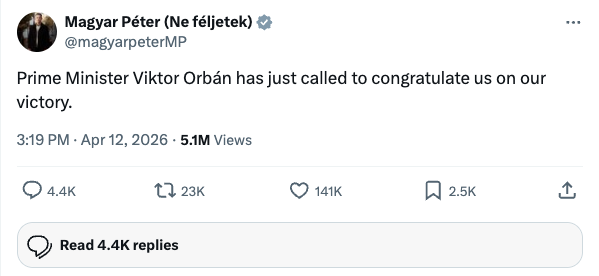
Orbán, 62, first became prime minister in 1998, served one term, then returned in 2010 and governed continuously for 16 years. He built what he called an "illiberal democracy" -- a model admired by nationalist leaders worldwide and criticized by the EU as an erosion of democratic norms.
Who Is Péter Magyar
Magyar, 45, is a lawyer and -- until recently -- a Fidesz insider. He was married to former Justice Minister Judit Varga and held government-connected positions for years.
His break came in February 2024, when President Katalin Novák was forced to resign over pardoning a man who covered up child sexual abuse at a state-run children's home. Magyar went public with recordings that implicated senior Fidesz figures, then resigned from all government-related positions.
He took over the minor Tisza party, won a European Parliament seat in June 2024, and built a mass movement on anti-corruption messaging, healthcare reform, and EU integration -- campaigning in a style Orbán's slick media apparatus had no template to counter.
What Changes
The implications extend well beyond Hungary.
Orbán had been the EU's most persistent obstructionist, wielding Hungary's veto to block collective action on Ukraine, migration, and rule-of-law enforcement. Most recently, he blocked a €90 billion EU loan to Ukraine -- only reversing himself last month after Russia accidentally bombed the Druzhba pipeline carrying Russian oil to Hungary.
Magyar has pledged to rebuild Hungary's relationships with the European Union and NATO. European leaders responded immediately:
- Ursula von der Leyen (EU Commission): "Hungary has chosen Europe. Europe has always chosen Hungary. Together we are stronger."
- Friedrich Merz (Germany): "Let's join forces for a strong, secure and united Europe."
- Donald Tusk (Poland): "Back together! Glorious victory, dear friends!"
- Volodymyr Zelensky (Ukraine): "Ukraine has always sought good-neighbourly relations with everyone in Europe and we are ready to advance our cooperation with Hungary."
The White House offered no immediate comment. Vice President JD Vance had traveled to Budapest five days before the election to campaign alongside Orbán -- a visit that became the subject of its own controversy after critics said it amounted to foreign interference in a democratic election.