IAEA Chief Says North Korea Shows 'Very Serious Increase' in Nuclear Weapons Production Capacity
IAEA Director General Rafael Grossi warned from Seoul that North Korea has ramped up operations at Yongbyon and completed construction of a new uranium enrichment facility, expanding its ability to produce weapons-grade material.
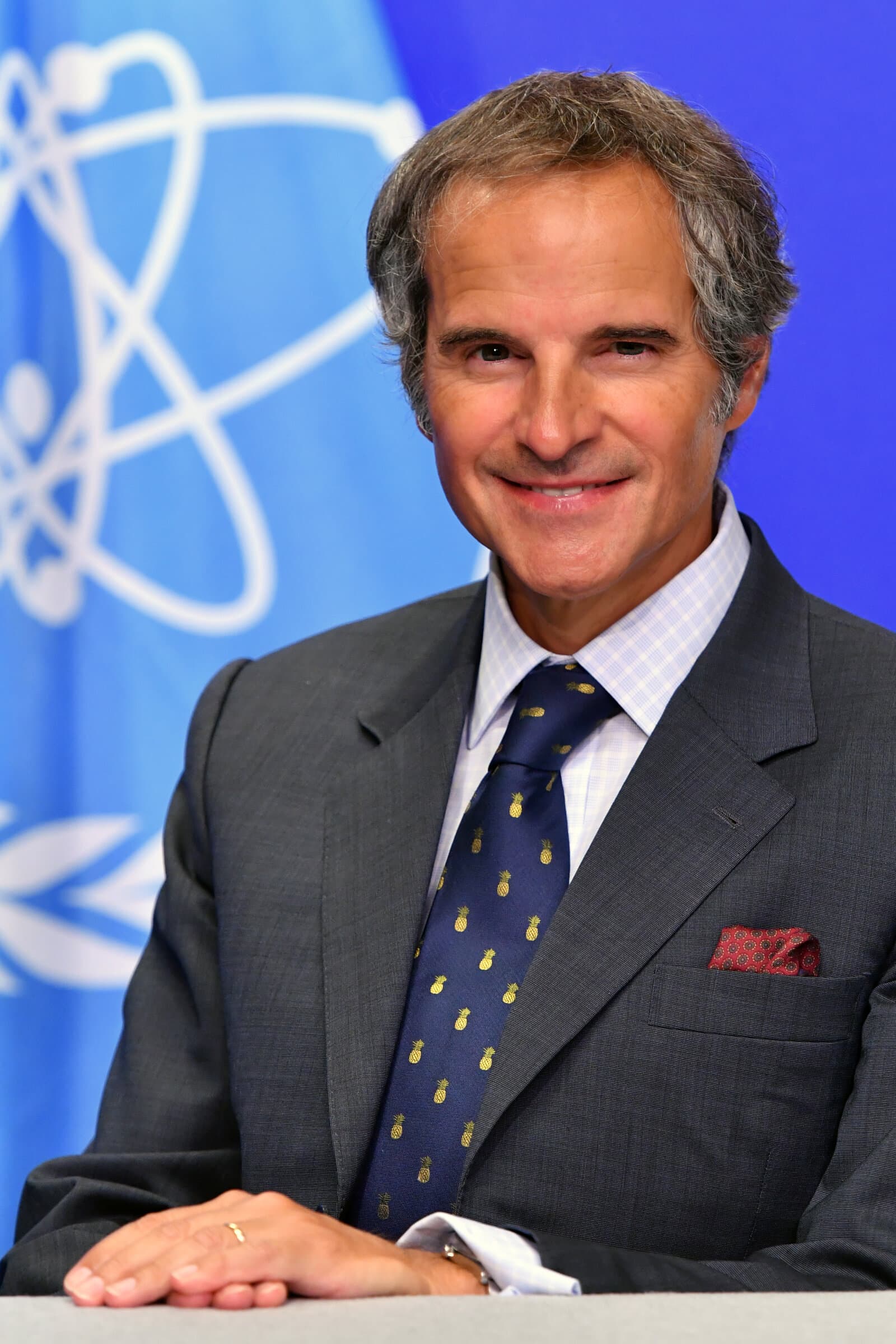
North Korea is showing a "very serious increase" in its ability to produce nuclear weapons, International Atomic Energy Agency Director General Rafael Grossi said during a press conference in Seoul on April 15.
Grossi, on his third visit to South Korea as IAEA chief, said the agency has confirmed a rapid increase in operations across multiple facilities at North Korea's Yongbyon nuclear complex -- the country's main nuclear site.
"In our periodic assessments, we have been able to confirm that there's a rapid increase in the operations" at the Yongbyon reactor, Grossi said. "All that points to a very serious increase in the capabilities of the DPRK in the area of nuclear weapons production."
What the IAEA Sees
The agency flagged increased activity at three existing Yongbyon facilities:
- The 5-megawatt reactor, which produces plutonium
- The reprocessing unit, which extracts weapons-usable plutonium from spent fuel
- The light-water reactor, whose operational status had been uncertain
More concerning is a new facility the IAEA has been watching since construction began in mid-December 2024. Grossi said it appears similar in design to the existing enrichment facility at Yongbyon, meaning it would significantly expand North Korea's capacity to produce highly enriched uranium -- the other pathway to a nuclear weapon.
"We consider, looking at external features of the facility, that there will be a significant increase in the enrichment capacity" of North Korea, Grossi said.
Satellite Imagery Confirms Completion
Two days before Grossi's statement, the Center for Strategic and International Studies published satellite imagery analysis showing the new facility is essentially complete. An image collected April 2 shows the building equipped with electrical generators, fuel storage tanks, cooling units, and support structures.
The facility sits 480 meters north-northeast of Yongbyon's Radiochemistry Laboratory and about 1,800 meters north of the existing centrifuge halls. Construction was externally complete by June 2025, with internal work continuing through early 2026.
CSIS assessed that the building's dimensions and infrastructure -- including power supply and cooling capacity -- are similar to the Kangson enrichment facility, another suspected North Korean uranium enrichment site.
Current Arsenal
North Korea is estimated to possess "a few dozen" nuclear warheads, according to Grossi. The IAEA has been unable to inspect North Korean nuclear facilities since Pyongyang expelled its inspectors in 2009.
Asked whether Russia was assisting North Korea's nuclear weapons development -- a concern sharpened by Pyongyang's deployment of troops to fight alongside Russian forces in Ukraine -- Grossi said the agency had not observed "anything in particular in that regard," calling it "too early days to judge."
Context
Grossi made the statements after meeting South Korean Foreign Minister Cho Hyun and former UN Secretary General Ban Ki-moon. He also visited the Korean Demilitarized Zone.
"As the world's attention is focused on developments in the Middle East, we must not forget tensions and divisions elsewhere, including here on the Korean Peninsula," Grossi said.
The IAEA said it stands ready to support diplomatic efforts to resolve the North Korean nuclear issue, though no negotiations are currently underway. The last substantive diplomacy between the United States and North Korea collapsed in 2019.