Nigerian Air Force Kills at Least 100 Civilians in Strike on Jilli Market
Military jets struck a packed weekly market in Jilli village on April 11 while targeting Boko Haram. Amnesty International confirmed the death toll; the Air Force says it hit "identified terrorist locations" and made no mention of civilian casualties.
Nigerian military jets struck a packed weekly market in Jilli village on the evening of April 11, killing at least 100 civilians in what Amnesty International called a "reckless use of deadly force." The death toll could reach 200, according to local leaders.
The strike, conducted under Operation HADIN KAI, targeted Boko Haram militants near the Borno-Yobe state border, approximately 200 kilometers from the Yobe state capital of Damaturu. Witnesses said three military jets bombed the market while hundreds of traders conducted normal business at the weekly gathering.
The Nigerian Air Force offered a starkly different account. Air Commodore Ehimen Ejodame, the NAF's Director of Public Relations, described the operation as "precision follow-up mop-up air strikes on identified terrorist locations within the Jilli axis of Borno State," executed "based on credible intelligence and in close coordination with ground forces."
The statement made no mention of a market, civilians, or casualties.
"Shocking Disregard for Civilian Lives"
Amnesty International's Nigeria director Isa Sanusi condemned the strike:
"Such reckless use of deadly force is unlawful, outrageous and lays bare the Nigerian military's shocking disregard for the lives of those it supposedly exists to protect."
The emergency unit at Geidam General Hospital received at least 35 patients with severe injuries, with hospital staff describing the facility as "overstretched as more injured persons continue to arrive." Amnesty confirmed casualties including children and called for an immediate, impartial investigation.
The Yobe State Government acknowledged that "some people who went to the Jilli weekly market were affected" -- a careful admission that the strike hit more than its intended target.
Abdulmumin Bulama, a civilian security group member working alongside the military, said intelligence suggested Boko Haram fighters were gathering near the market to plan attacks. "The intel was shared and the air force jet acted based on the credible information," he said.
Prominent Nigerian cleric Sheikh Ahmad Gumi was blunt: "We need answers, not condolences."
500 Civilians Killed Since 2017
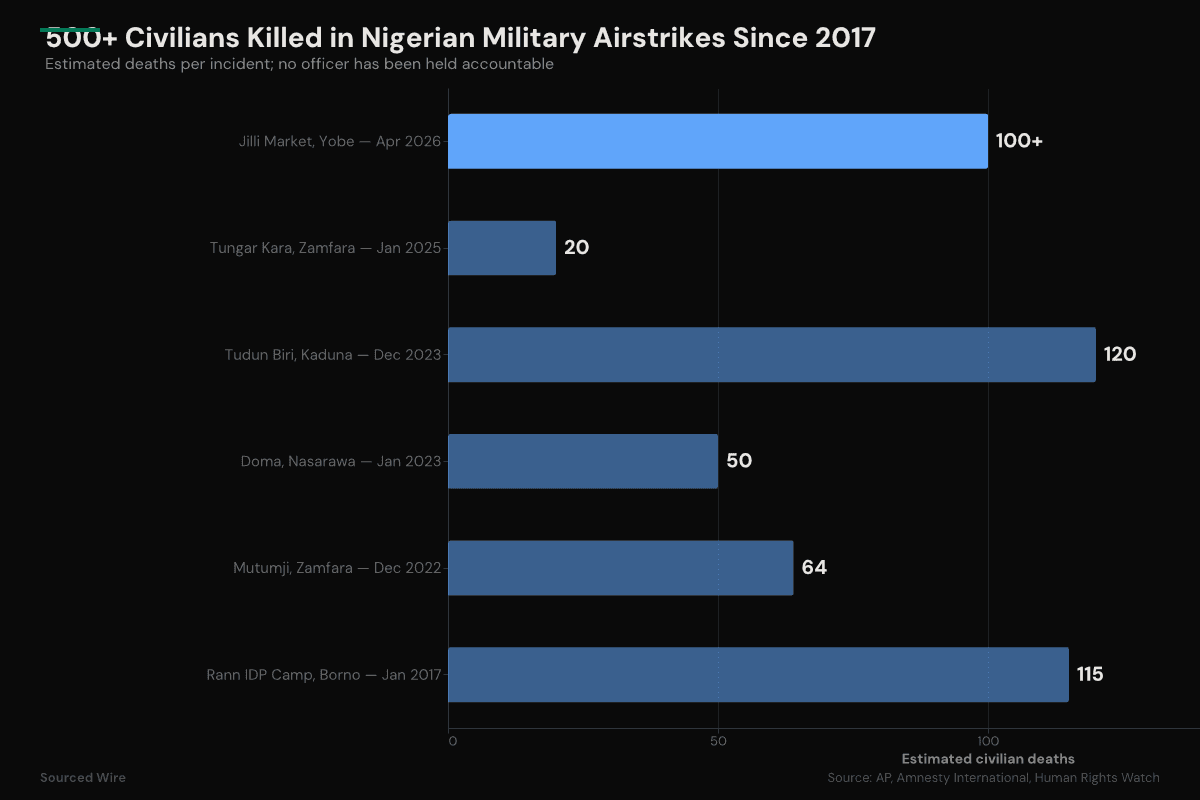
Jilli is not an aberration. According to an Associated Press tally, Nigerian military air raids have killed at least 500 civilians since 2017 -- a pattern that Human Rights Watch has called a failure of "transparent, clear, and meaningful steps towards accountability or reparations."
| Date | Location | Deaths |
|---|---|---|
| January 2017 | Rann IDP camp, Borno | 115+ |
| December 2022 | Mutumji, Zamfara | 64 |
| January 2023 | Doma, Nasarawa | 50 |
| December 2023 | Tudun Biri, Kaduna | 120 |
| January 2025 | Tungar Kara, Zamfara | 20 |
| April 2026 | Jilli Market, Yobe | 100+ |
The Rann strike in January 2017 hit an internally displaced persons camp near the Cameroon border, killing at least 115 people including six Red Cross workers. In December 2023, a drone strike on Tudun Biri village in Kaduna state killed 120 people gathered for a Muslim festival.
After each incident, the military either denied striking civilians or announced investigations. None has produced public results. Following a January 2025 strike in Zamfara that killed 20 people, the military announced an investigation. According to Human Rights Watch, "no information has been provided since."
Security analysts attribute the recurring failures to systemic problems: insufficient intelligence gathering and poor coordination between ground troops, air assets, and local stakeholders. No Nigerian military officer has been publicly held accountable for any of these strikes.