Spain Signs 19 Agreements With China as Sanchez Calls Trade Deficit 'Unsustainable'
Spanish PM Sanchez deepened EU-China ties at a Beijing summit with Xi Jinping, launching a strategic dialogue and signing 19 deals while calling Spain's 74% trade deficit with China 'unsustainable for our societies.'
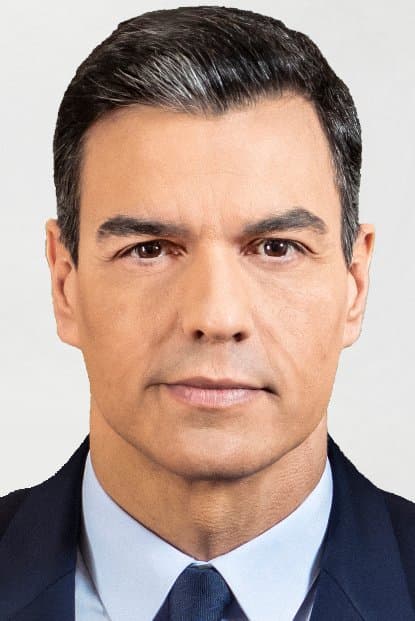
Spanish Prime Minister Pedro Sanchez signed 19 bilateral agreements with China on Tuesday after meeting President Xi Jinping at the Diaoyutai State Guest House in Beijing, the fourth time in four years the Spanish leader has traveled to the Chinese capital.
The agreements cover green development, new energy, smart economy, trade, and cultural and educational exchanges. The two leaders launched a "strategic dialogue" between Madrid and Beijing.
But the visit carried a tension that Sanchez did not try to hide. In a speech at Tsinghua University the day before the summit, he laid out the numbers: Spain's trade deficit with China now represents 74% of the country's total trade deficit, and it grew 18% last year.
"This is unsustainable for our societies."
Sanchez's formula was to deepen ties while demanding reciprocity. "China should see Spain and Europe as partners for investment and cooperation," he said. And more pointedly: "Open up, so Europe doesn't have to close itself."
Xi's message: the jungle or the rules
Xi framed the visit in broader terms, warning against what he called a "backslide into the law of the jungle" in international relations. He called instead for "true multilateralism" and "an equal and orderly multipolar world" -- language widely read as a rebuke of the Trump administration's tariff-driven trade approach, though Xi named no country.
Xi proposed strengthening cooperation in trade, new energy, and the smart economy, and encouraged exchanges in culture, education, scientific research, and sports. He described China-Spain relations as having "strategic resolve" despite global turbulence.
Sanchez, for his part, affirmed Spain's adherence to the one-China principle and expressed support for Xi's "four major Global Initiatives."
The case Sanchez made at Tsinghua
Sanchez's Tsinghua speech was the most substantive statement of the visit -- a 40-minute argument for why Europe and China need each other, delivered to students at one of China's most prestigious universities.
His central thesis: the current global shift is not "a transfer of hegemonies" but "a multiplication of poles" -- prosperity emerging simultaneously across Africa, Asia, and Latin America. Without a united Europe and Chinese participation, he argued, "there cannot be a stable international order."
But he coupled the aspiration with a warning about the rules that order requires. "A multipolar world without rules leads to rivalry," Sanchez said. "From rivalry emerge only wars, commercial conflicts, and ruin."
He called for UN Security Council reform to be more representative, for a woman to lead the UN Secretary General position for the first time, and for compliance with international law regarding Ukraine, Lebanon, and Iran.
Context
The visit comes at a moment when EU-US relations are strained by Trump's tariff escalation. Sanchez has positioned Spain as a bridge between Brussels and Beijing -- the EU signed 25 cooperation agreements with China over the past decade, and increased Southern Global imports by 80%.
Sanchez also met with Xiaomi CEO Lei Jun during the visit, signaling interest in Chinese technology investment in Spain.
Spain is the EU's fourth-largest economy. With 19 agreements in a single visit, Sanchez is betting that the EU-China relationship can be rebalanced without being severed -- even as the deficit numbers suggest the current terms are not working.