Trump Attacks NATO After Rutte Meeting: 'They Won't Be There If We Need Them Again'
President Trump posted a blistering attack on NATO hours after meeting Secretary General Mark Rutte at the White House, demanding allies commit naval forces to the Strait of Hormuz within days and signaling the administration may relocate US bases away from uncooperative members.
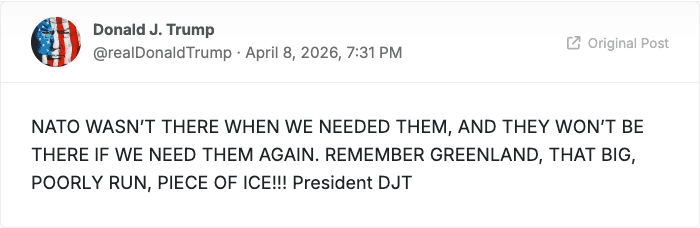
President Trump posted a blistering attack on NATO hours after meeting Secretary General Mark Rutte at the White House on April 8.
"NATO WASN'T THERE WHEN WE NEEDED THEM, AND THEY WON'T BE THERE IF WE NEED THEM AGAIN. REMEMBER GREENLAND, THAT BIG, POORLY RUN, PIECE OF ICE!!!"
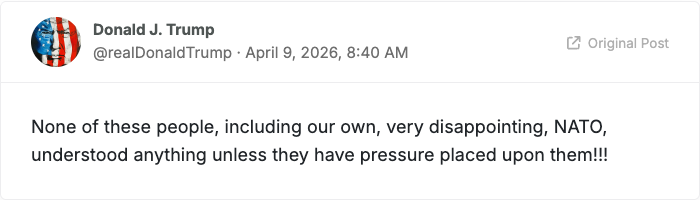
The next morning, he followed up:
"None of these people, including our own, very disappointing, NATO, understood anything unless they have pressure placed upon them!!!"
The posts came after a White House meeting that Rutte described as "a very frank, very open discussion, but also a discussion between two good friends." Secretary of State Marco Rubio and Defense Secretary Pete Hegseth also attended.
What Trump wants
Trump is demanding NATO allies commit naval forces to the Strait of Hormuz "within days rather than weeks" -- a direct ultimatum tied to the ongoing Iran conflict. A NATO spokesperson confirmed the stakes: "The United States expects concrete commitments and action."
The administration is also weighing a more tangible response: relocating US military bases from countries deemed unhelpful to those that supported US operations. Bases potentially affected include Ramstein Air Base, Grafenwoehr, and Hohenfels in Germany, and the Rota naval base in Spain. Poland, Romania, Lithuania, and Greece could gain US forces instead.
The plan echoes Trump's first-term proposal to withdraw 12,000 troops from Germany, which was never implemented.
European response
Key NATO allies have pushed back. German Defense Minister Boris Pistorius responded bluntly: "This is not our war, we have not started it." The UK stated it would not assist with any Hormuz blockade.
Rutte struck a conciliatory tone: "I can see his point. But at the same time, I was also able to point to the fact that the large majority of European nations have been helpful."
Over 40 countries have joined a coalition to secure passage through the Strait of Hormuz, though several major NATO members -- the UK, Germany, Finland, Norway, France, and Spain -- initially declined to deploy.
The legal barrier
Despite the rhetoric, Trump cannot unilaterally withdraw the US from NATO. The National Defense Authorization Act, signed into law in 2023 by President Biden, forbids any president from leaving the alliance without a two-thirds vote of the Senate or an act of Congress.
Moving bases, however, falls within executive authority and requires no congressional approval -- making the base relocation threat the more immediate lever.