Appeals Court Allows White House Ballroom Construction Through April 17
A divided DC Circuit panel stayed a lower court order halting the $400 million project, sending the case back to weigh the administration's claim that stopping construction would jeopardize presidential security.
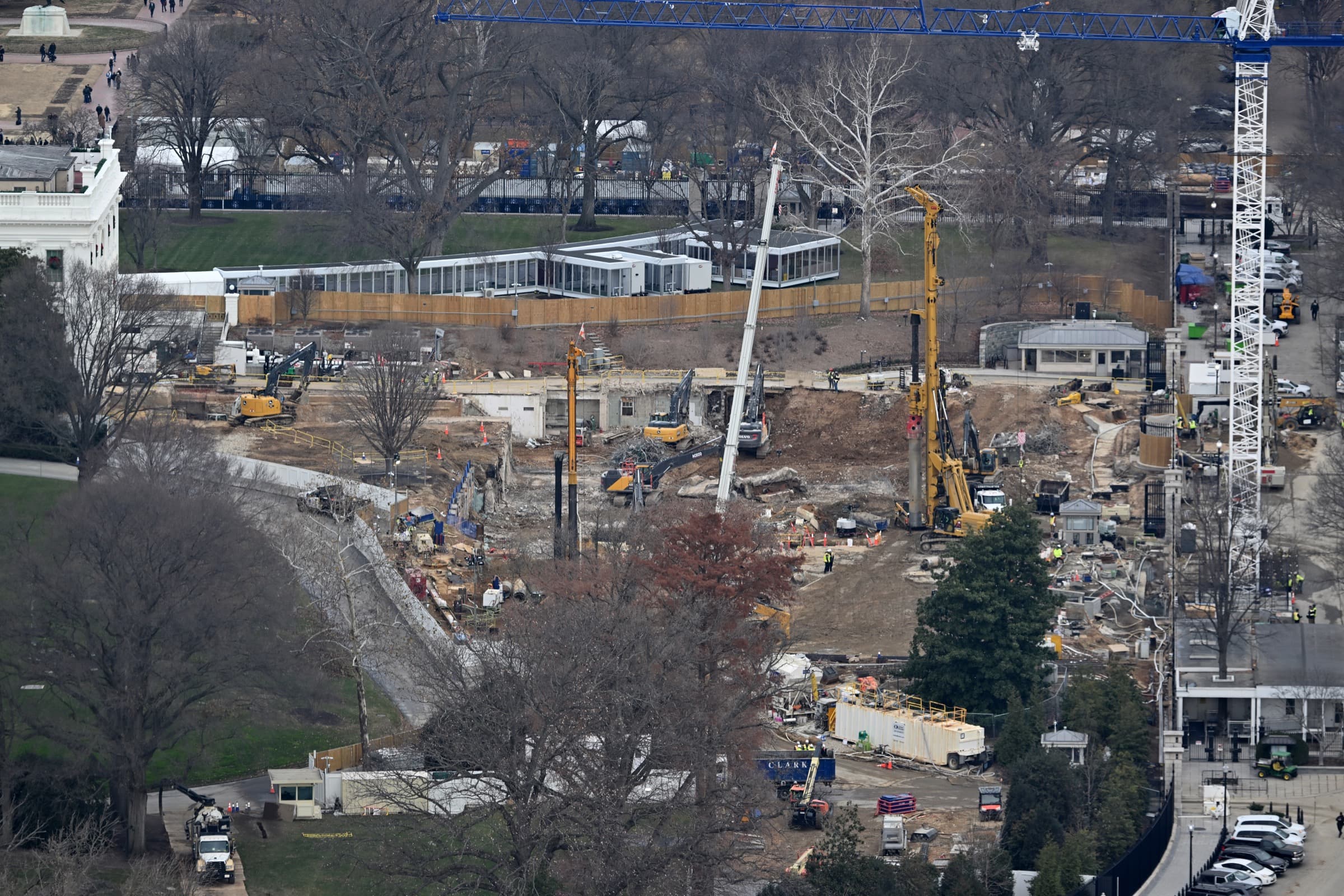
The U.S. Court of Appeals for the D.C. Circuit ruled 2-1 on April 11 that construction of President Trump's White House ballroom can continue through at least April 17, staying a lower court order that had halted the $400 million project for lacking congressional authorization.
The three-judge panel -- Patricia Millett, Neomi Rao, and Bradley Garcia -- sent the case back to U.S. District Judge Richard Leon, directing him to more carefully weigh the administration's argument that stopping construction would create national security vulnerabilities. The majority said it did not have enough information to determine how much of the project could be suspended without jeopardizing the safety of the president, his family, or White House staff.
The Ruling
Judge Leon had granted a preliminary injunction on March 31, finding that "no statute gives the President authority to build the ballroom." He pointed to two federal laws: 3 U.S.C. § 105(d), which covers only "ordinary maintenance and repair" of the White House, and 40 U.S.C. § 8106, which requires "express authority of Congress" for erecting federal buildings in Washington.
The appeals court did not disturb that legal finding. Instead, Millett and Garcia -- appointed by Presidents Obama and Biden respectively -- ruled on narrower procedural grounds: Judge Leon needed to examine the security implications before ordering a halt. The stay extends through April 17 to give him time to do so, and to allow the administration to seek Supreme Court review if necessary.
Judge Rao, a Trump appointee, dissented -- arguing for broader executive authority. She would have gone further in the administration's favor, citing a statute she argued gives the president authority to make White House improvements and writing that "the government has presented credible evidence of ongoing security vulnerabilities at the White House that would be prolonged by halting construction." Those concerns, she wrote, outweigh the "generalized aesthetic harms" in the lawsuit.
The Security Question
The administration's national security argument centers on what lies beneath the ballroom. When demolition of the East Wing began in October 2025, workers dismantled the Presidential Emergency Operations Center -- the FDR-era bunker where Vice President Cheney sheltered on September 11, 2001, and where Trump retreated during George Floyd protests in 2020.
Trump told reporters on March 29: "The military is building a big complex under the ballroom." Court filings describe the project as including missile-resistant steel columns, drone-proof roofing, blast-proof glass, bomb shelters, and hospital facilities.
The National Trust for Historic Preservation, which brought the lawsuit, argues the administration is conflating two distinct things: the above-ground ballroom, which requires congressional authorization, and the below-ground military infrastructure, which may not. "The absence of a massive ballroom on White House grounds has not stopped this (or any other) President from residing at the White House or hosting events there," the group's lawyers wrote.
The Project
The ballroom replaces what was, for 83 years, the East Wing -- home to the First Lady's office, the White House Social Secretary, and the Jacqueline Kennedy Garden. Demolition began October 2025. The new structure spans 89,000 square feet and is designed to seat 999 guests, nearly three times the capacity of the existing East Room.
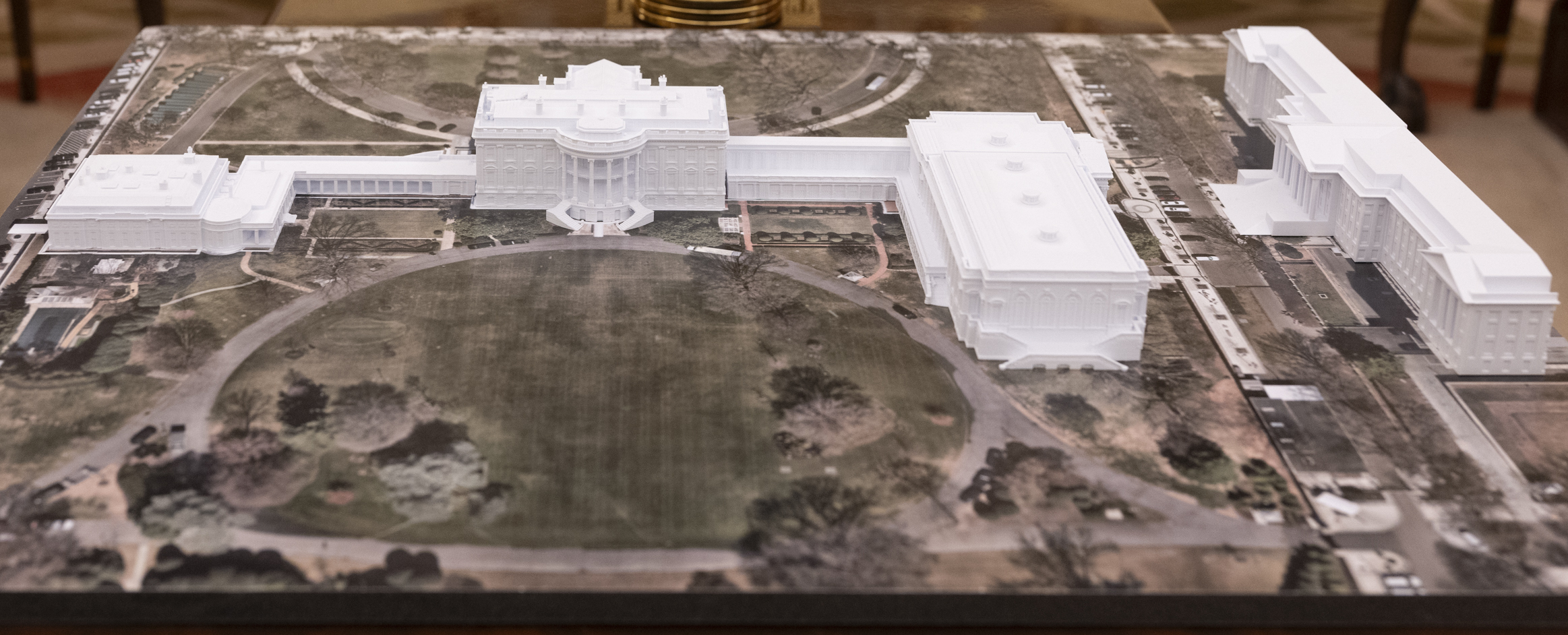
The project's cost has climbed from $200 million when announced in July 2025 to $400 million by December. Total White House renovation spending is projected at $551 million across fiscal years 2026 and 2027 -- an 866% increase over the prior year. Nearly all comes from private donors, including Meta, Apple, Google, Amazon, the Adelson Family Foundation, Blackstone CEO Stephen Schwarzman, and Tyler and Cameron Winklevoss. The administration routes $350 million through the National Park Service gift account, classifying it as mandatory spending that bypasses annual congressional appropriations.
Public comment has been overwhelmingly negative. The Commission of Fine Arts received 2,000 comments, 99% critical, before approving the designs unanimously on February 19. The National Capital Planning Commission received over 32,000 comments, approximately 98% opposed, and approved the final design 8-1 on April 2.
What's Next
Judge Leon has until April 17 to reconsider whether a construction halt poses genuine security risks distinct from the ballroom project itself. If he maintains the injunction, the administration can appeal again to the DC Circuit or seek Supreme Court review.
The core constitutional question -- whether a president can build a permanent structure on the White House grounds without congressional authorization -- remains unresolved. Judge Leon's answer was unambiguous: no. The appeals court has not yet weighed in on the merits.