Federal Judge Blocks TPS Termination for 5,000 Ethiopians, Calling DHS Rationale 'Pretextual'
Judge Brian Murphy ruled that DHS Secretary Noem 'flagrantly ignored' the statutory requirement to consult with other agencies before ending protections, and that DHS's own 2025 reports contradicted its claim that Ethiopia was safe. The Supreme Court will hear arguments on similar TPS cases involving 350,000 Haitians on April 29.
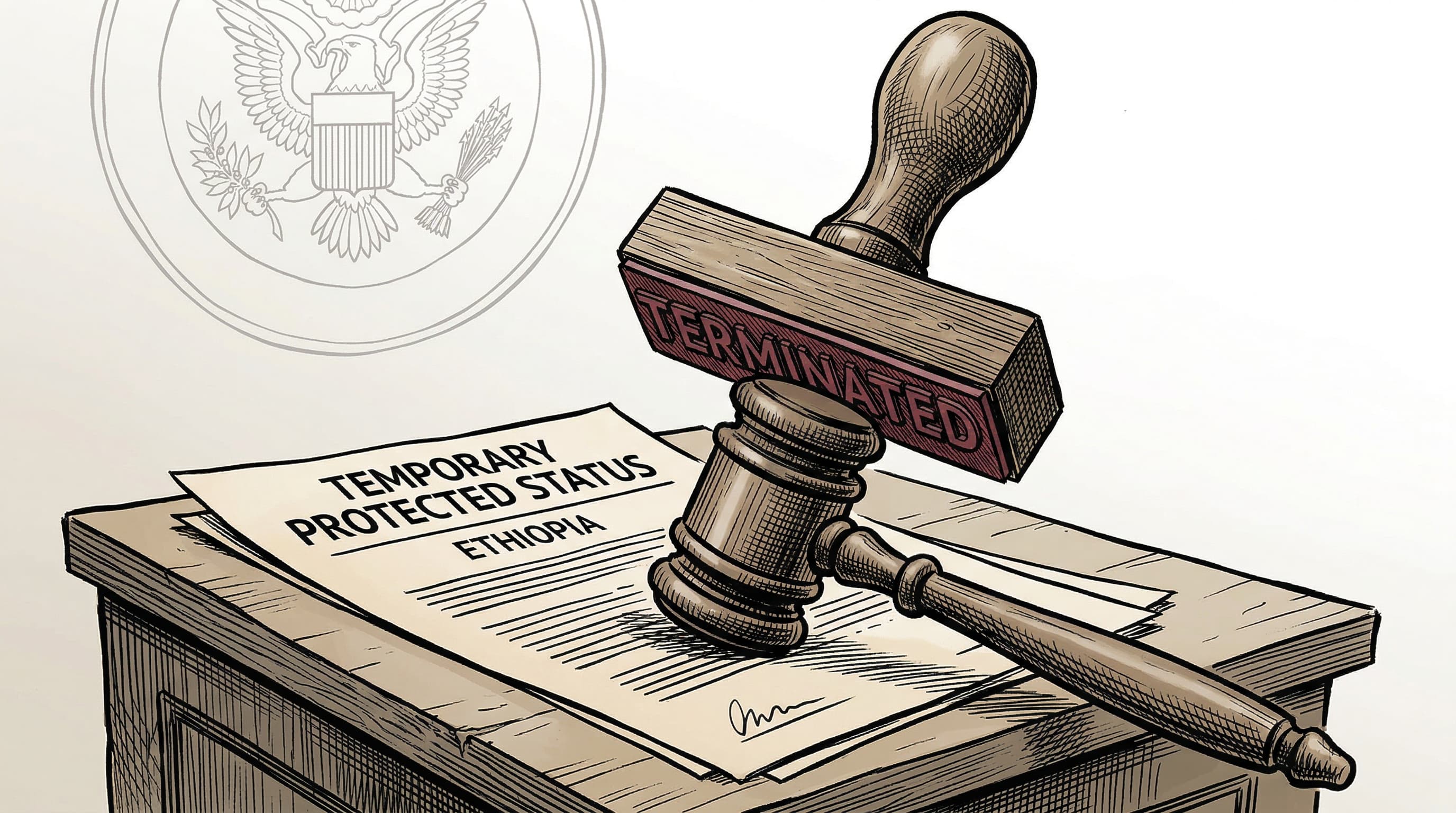
A federal judge in Boston blocked the Trump administration from terminating Temporary Protected Status for roughly 5,000 Ethiopian nationals, finding that DHS Secretary Kristi Noem provided a "pretextual" rationale for the decision and ignored the process Congress required.
The Ruling
U.S. District Judge Brian E. Murphy issued a memorandum and order on April 8 in African Communities Together v. Noem (1:26-cv-10278), granting a postponement of the termination that DHS had scheduled for February 13.
Murphy found that Noem "flagrantly ignored" the legal requirement to carry out a meaningful consultation with other agencies about whether conditions in Ethiopia had actually changed before deciding to end TPS. The judge wrote that the decision "signals that the outcome of designation, extension and termination decisions will be preordained, rather than based on a meaningful review of in-country conditions."
The most pointed passage:
"Fundamental to this case -- and indeed to our constitutional system -- is the principle that the will of the President does not supersede that of Congress. Presidential whims do not and cannot supplant agencies' statutory obligations."
DHS's Own Reports Contradicted Its Decision
The administrative record revealed a striking problem for the government's position: DHS's own reports from August and September 2025 documented that armed conflict and natural disasters continued to create dangerous conditions in Ethiopia. Noem announced the termination three months later, in December, claiming conditions no longer posed a serious threat.
Murphy found that the gap between the agency's own assessments and the secretary's decision was evidence that the termination was "a preordained decision" dressed in procedural language. The plaintiffs -- African Communities Together, a nonprofit, and three Ethiopian TPS holders -- brought claims under the Administrative Procedure Act and the Fifth Amendment's Equal Protection Clause.
Who's Affected
Approximately 5,000 Ethiopian nationals hold TPS in the United States, with more than 260 applications still pending when Noem announced the termination on December 15, 2025. TPS provides work authorization and protection from deportation to nationals of countries experiencing armed conflict, environmental disasters, or other extraordinary conditions.
The Biden administration first designated Ethiopia for TPS in December 2022, citing armed conflict -- including the civil war in Tigray -- and extended it in April 2024 for 18 months through December 2025.
Ethiopian TPS holders will continue to retain their protections and work authorization while the litigation proceeds.
What's Next
This ruling is one battle in a broader war over TPS. The Trump administration has moved to terminate protections for nationals of multiple countries, and similar legal challenges are pending:
| Country | TPS Holders | Status |
|---|---|---|
| Haiti | ~350,000 | Supreme Court oral arguments April 29 |
| Syria | ~6,100 | Under review |
| South Sudan | Thousands | Separate challenge in same court |
| Ethiopia | ~5,000 | Blocked by this ruling |
The Supreme Court's April 29 hearing on TPS for Haitians will likely set the legal framework for all of these cases. If the Court rules that TPS terminations are subject to judicial review under the APA, it would strengthen the hand of challengers in every pending case. If it rules they are unreviewable executive discretion, this and similar rulings could be reversed.
The government is expected to appeal Murphy's ruling to the First Circuit, where a related case (26-1254) is already pending.