UN Rights Experts Demand Full Epstein Trafficking Probe, Warn 'Culture of Impunity' Is Protecting Perpetrators
The UN Special Rapporteur on trafficking and five members of the Working Group on discrimination against women and girls issued a joint statement Thursday calling for a 'full and transparent investigation' of the Epstein files allegations -- their second 2026 intervention after February's warning that DOJ disclosures were 'flawed.'
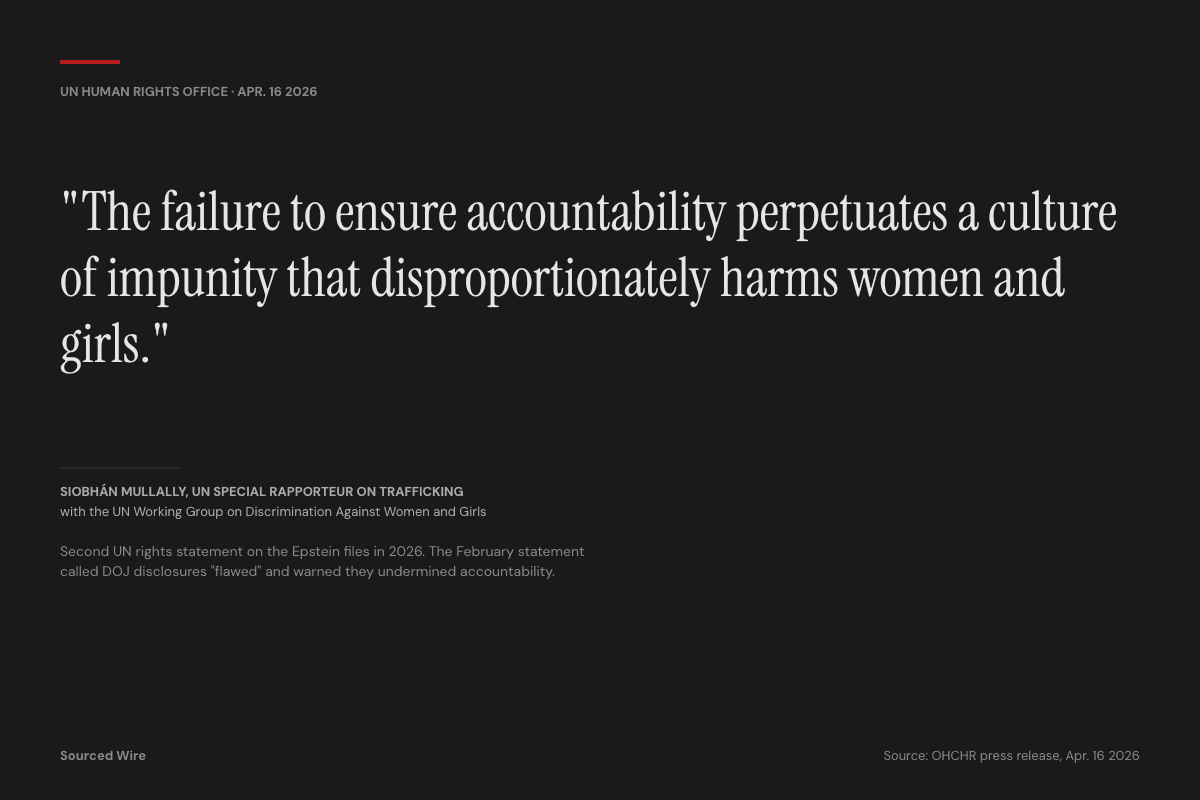
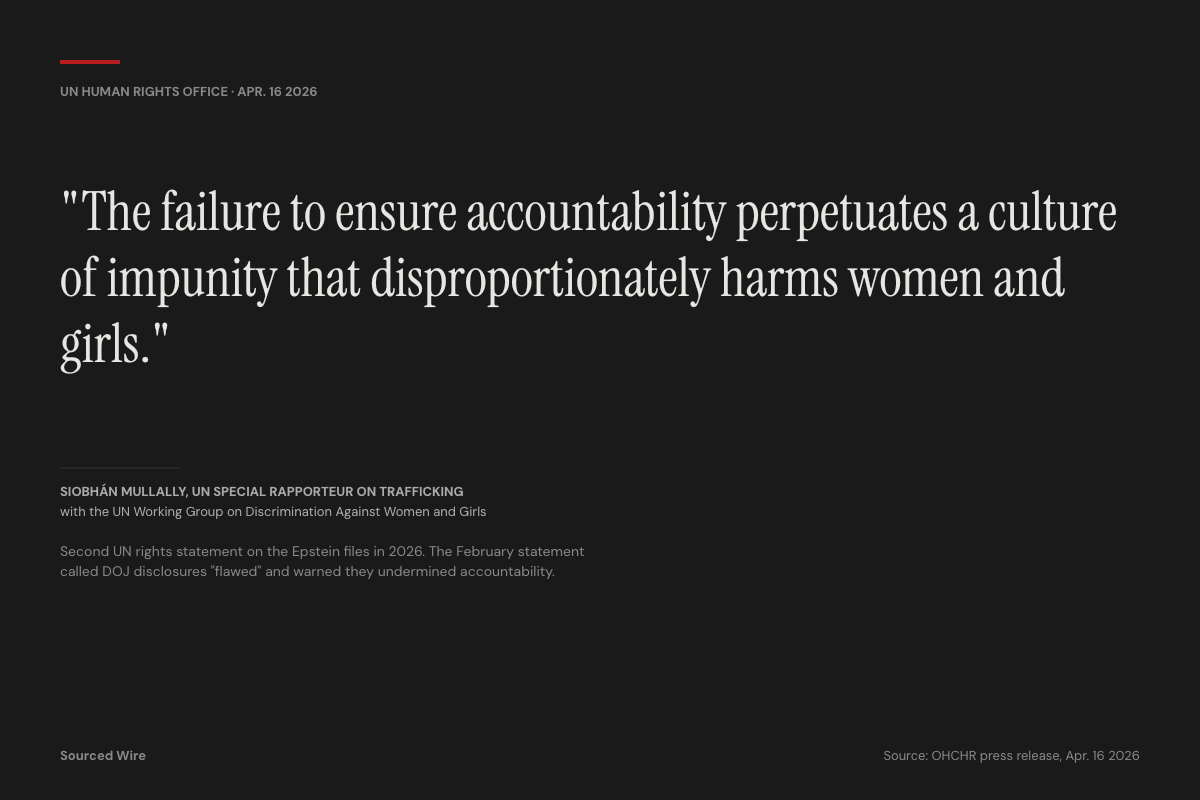
UN human rights experts on April 16 called for a full, transparent investigation of the trafficking allegations contained in the so-called Epstein files, warning that "the failure to ensure accountability perpetuates a culture of impunity that disproportionately harms women and girls."
The statement was issued by Siobhán Mullally, the UN Special Rapporteur on trafficking in persons, especially women and children, together with five members of the UN Working Group on discrimination against women and girls. All hold independent mandates from the Geneva-based UN Human Rights Council.
"We are gravely concerned by the credible allegations in the 'Epstein files' of systemic trafficking of young women and girls for purposes of sexual exploitation and call for a full and transparent investigation," the experts said.
The experts framed the Epstein disclosures as evidence of a possible transnational criminal enterprise. According to the underlying OHCHR communication, the materials describe "the widespread trafficking of girls and young women across multiple international borders over decades" and implicate "senior politicians, public figures, diplomats, global business leaders and leading academics."
What the experts demanded
The statement set out specific obligations on states, not rhetorical concern. The experts called for:
- A full and transparent investigation into the trafficking allegations
- Access to justice and effective remedies for victims
- Compensation and reparations
- Guarantees of non-repetition
- Medical and psychosocial assistance for survivors
- Long-term social inclusion and recovery measures
"The trafficking of children and young women is a serious criminal offence and a grave violation of human rights," the experts said. "Victims and survivors must be at the centre of effective trauma-informed and gender-sensitive responses."
The closing line framed the inaction as a state obligation, not a political preference: "States bear the obligation to act, and that obligation is long overdue."
Second UN intervention this year
The April 16 statement is the second time in 2026 that UN Human Rights Council-appointed experts have publicly criticized the handling of the Epstein disclosures.
In February, the same mandate holders issued a statement titled "Flawed 'Epstein Files' disclosures undermine accountability for grave crimes against women and girls," criticizing the structure of the U.S. Department of Justice's release and warning that it risked exposing victims without advancing prosecution. The U.S. Department of Justice began releasing the files in late 2025.
The UN mandate holders do not have prosecutorial authority. Their statements are formal interventions under the Human Rights Council's special procedures, addressed to states that retain the legal duty to investigate and prosecute.
Congressional and domestic context
The UN call arrives amid an active U.S. domestic standoff over the same files. Attorney General Pam Bondi has refused to comply with a bipartisan congressional subpoena for unredacted Epstein files, with the DOJ arguing that the firing of the underlying custodian renders the subpoena moot. First Lady Melania Trump issued a rare White House statement earlier this month denying any ties to Epstein and calling on Congress to hold hearings with survivors.
The UN experts did not name specific individuals, governments, or the DOJ process directly, but their reference to a "culture of impunity" and the repeat intervention in two months indicate sustained international pressure on the U.S. and other implicated jurisdictions to conduct formal investigations rather than rely on document releases alone.