Latvia Signs Artemis Accords as 62nd Nation, Expanding NASA's Lunar Coalition
Latvia's Minister for Education and Science Dace Melbarde signed the Artemis Accords at NASA Headquarters on Monday, bringing the U.S.-led framework for peaceful space exploration to 62 signatories across six continents.
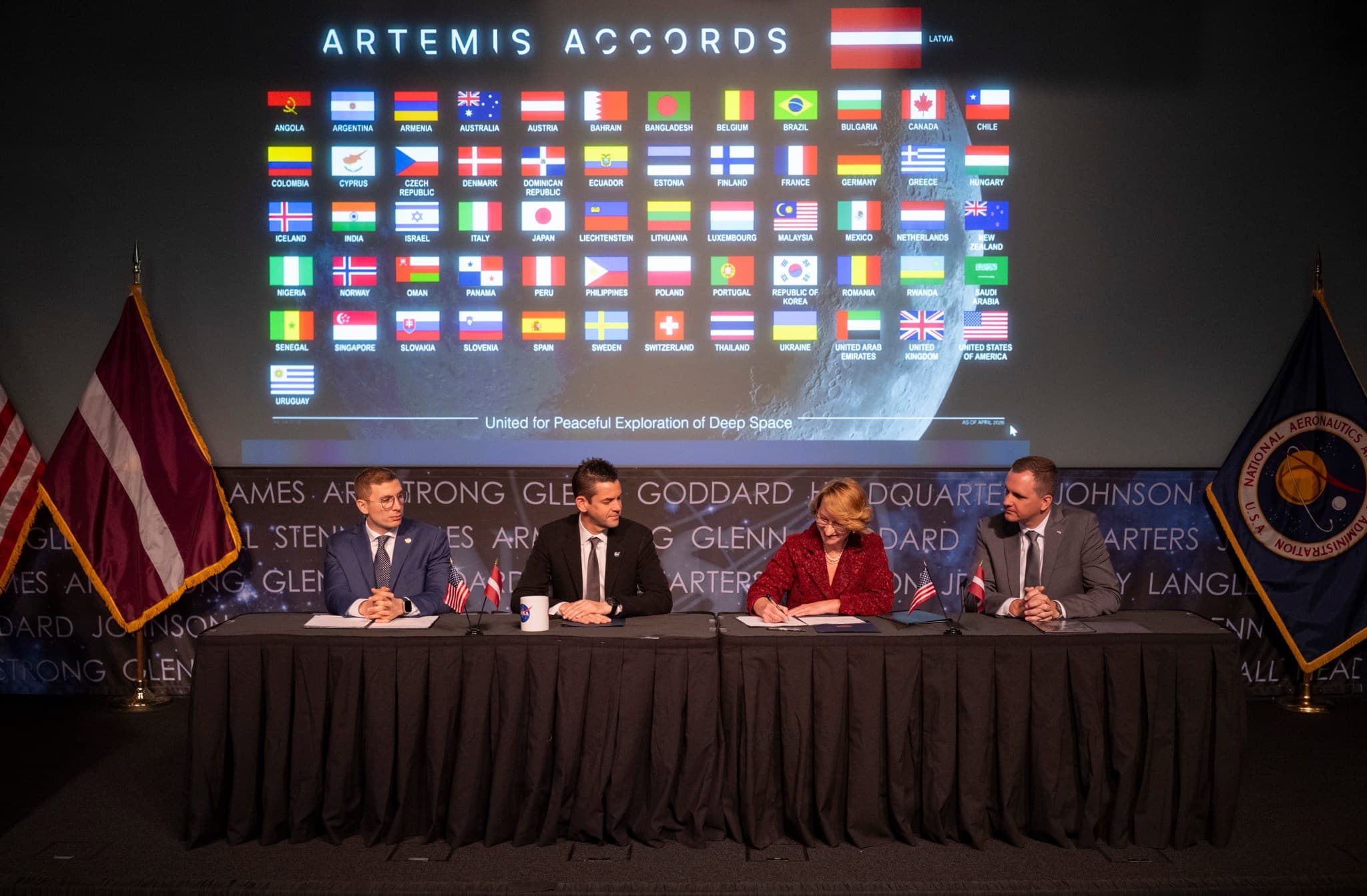
Latvia became the 62nd nation to sign the Artemis Accords on Monday during a ceremony at the Mary W. Jackson NASA Headquarters building in Washington, extending the U.S.-led coalition that governs cooperative lunar and deep-space exploration to 29 European member states.
Latvia's Minister for Education and Science Dace Melbarde signed the document alongside NASA Administrator Jared Isaacman, U.S. Under Secretary of State for Economic Affairs Jacob Helberg, and Janis Bekeris, charge d'affaires a.i. at the Embassy of the Republic of Latvia to the United States. More than 40 representatives from other Artemis Accords countries attended.
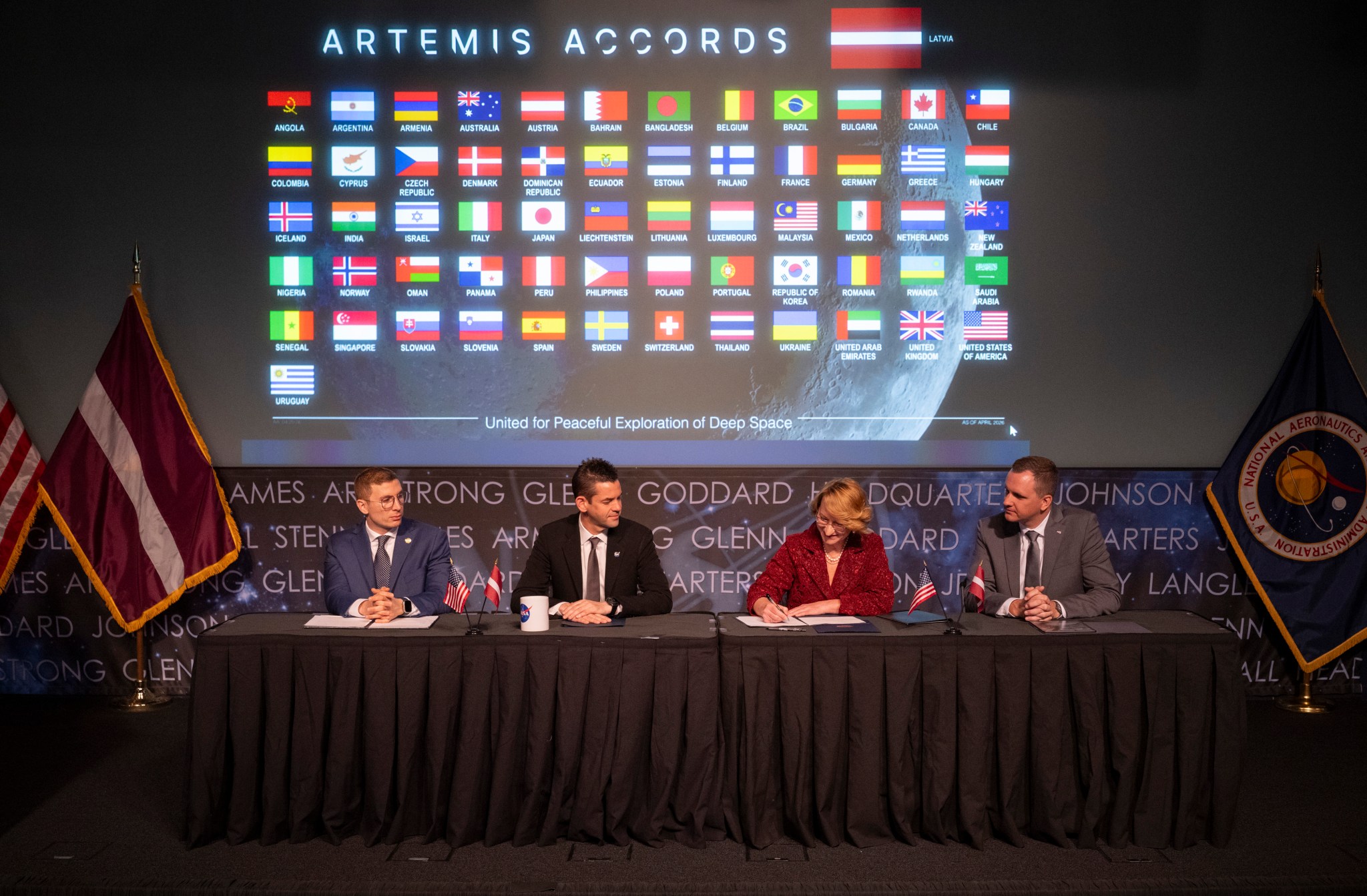
"Each new signatory strengthens a coalition committed to the transparent and peaceful exploration of space," Isaacman said in NASA's release announcing the agreement.
Melbarde framed the signing as an investment in Latvia's domestic space capacity. "By joining the Artemis Accords, we make a clear commitment to these principles," she said, adding that the move would deepen cooperation between Latvia and NASA across research, industry, and workforce development.
What the Accords commit signatories to
First established in 2020, the Artemis Accords set out a set of non-binding principles tied to NASA's Artemis program, which returned humans to the vicinity of the Moon earlier this month with the Artemis II mission. Signatories agree to:
- Conduct all activities for peaceful purposes
- Operate transparently and share scientific data
- Render assistance to personnel in distress
- Avoid harmful interference with the activities of other signatories
- Preserve historically significant sites and artifacts, including the Apollo landing sites
A coalition that keeps growing
Latvia is the third country to sign in 2026, following Portugal and Oman. The Accords now include 29 nations in Europe, 15 in Asia, seven in South America, five in North America, four in Africa, and two in Oceania. Russia and China, which have pursued a separate International Lunar Research Station initiative, remain outside the framework.
Latvia is a member of the European Space Agency as an associate member and already participates in the global space ecosystem through industry and research, according to Melbarde. The signing formalizes Latvia's alignment with the U.S.-led approach to lunar governance at a moment when NASA is preparing to return humans to the lunar surface on Artemis III.