US Teen Birth Rate Falls 7% to Another Record Low, Extending an 81% Decline Since 1991
The fertility rate for females ages 15 to 19 dropped to 11.7 births per 1,000 in 2025, according to provisional CDC data released today, down from a peak of 61.8 in 1991 and continuing the longest sustained decline in US birth statistics.
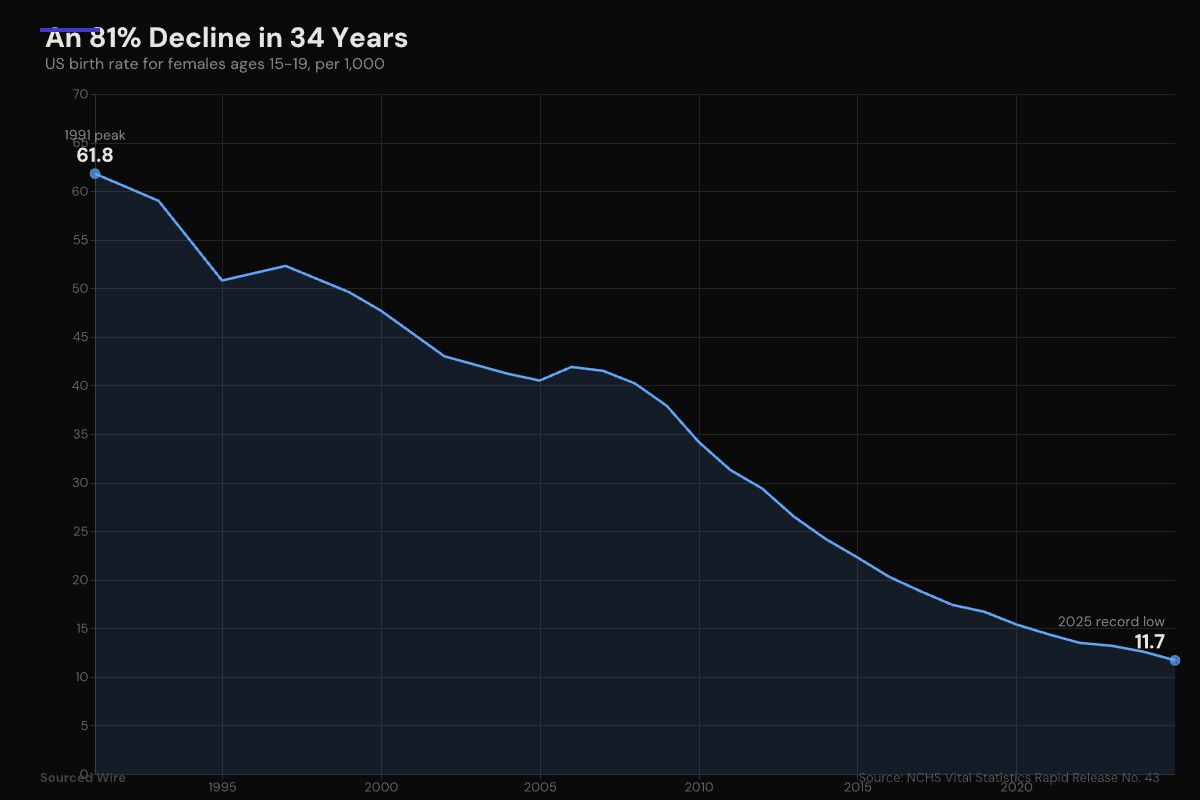
The fertility rate for teenagers ages 15 to 19 fell to 11.7 births per 1,000 in 2025, a 7% decline from 12.6 in 2024 and another record low, according to provisional data released today by the National Center for Health Statistics.
The rate has now set a new record low every year since 2009.
| Indicator | 2025 | 2024 | Change |
|---|---|---|---|
| Teen birth rate (15-19) | 11.7 | 12.6 | -7% |
| Younger teens (15-17) | 4.7 | 5.3 | -11% |
| Older teens (18-19) | 21.9 | 23.6 | -7% |
| Total US births | 3,606,400 | 3,628,934 | -1% |
| General fertility rate | 53.1 | 53.8 | -1% |
| Cesarean delivery rate | 32.5% | 32.4% | +0.1pp |
| Preterm birth rate |
Rates are births per 1,000 females in each age group. Source: NCHS Vital Statistics Rapid Release No. 43.
The Long Decline
The 2025 rate marks an 81% drop from the 1991 peak of 61.8 births per 1,000 teenagers and a 72% drop since 2007, when the most recent sustained decline began.
The decline is steeper among younger teenagers. Since 2007, the birth rate for 15-to-17-year-olds has fallen 78%, compared with 69% for 18-to-19-year-olds. In 2025, younger teens had a birth rate of just 4.7 per 1,000 -- roughly one birth for every 213 girls in that age group.
Researchers attribute the decades-long decline to multiple factors: less sexual activity among teenagers, greater access to contraception, and the availability of abortion. The report does not isolate the contribution of any single factor.
Fewer Births Overall
The teen data is part of a broader contraction. The total number of US births fell to 3,606,400 in 2025, a 1% decline from 2024. Births declined an average of 2% per year from 2015 through 2020 before leveling off.
The general fertility rate -- births per 1,000 women ages 15 to 44 -- fell to 53.1, down 1% from 2024 and 23% below its 2007 level.
Cesarean Rate Climbs to Decade High
One indicator moved in the opposite direction. The cesarean delivery rate rose to 32.5% in 2025, the highest since 2013 and a continuation of annual increases that began in 2020. The low-risk cesarean rate also climbed to 26.9%, the highest since 2012.
The preterm birth rate was unchanged at 10.41%.