Burkina Faso's Military Ruler Tells Citizens to 'Forget Democracy': 'It Is Not for Us'
Captain Ibrahim Traore, who seized power in a 2022 coup, declared on state television that democracy is "not for us" and compared democratic governance to slavery -- two months after dissolving every political party in the country by decree.
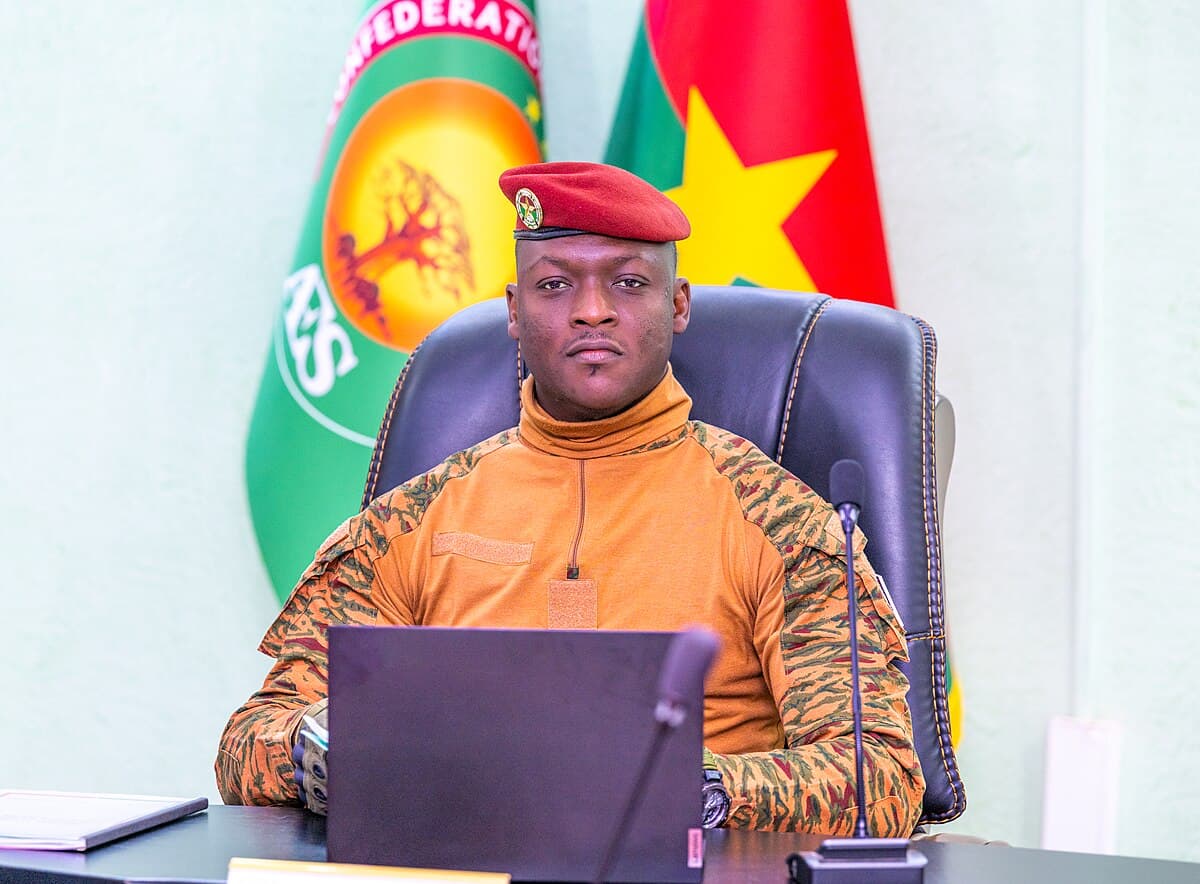
Captain Ibrahim Traore, the military officer who has ruled Burkina Faso since seizing power in a September 2022 coup, told citizens to abandon any hope of elections in a two-hour press conference broadcast on the state television network RTB on April 2.
"We must tell the truth. Democracy is not for us, this kind of democracy that these people show us. That's not what interests us."
Traore went further, calling democratic governance a form of subjugation: "Democracy is slavery. There is no democracy in this world. They pretend there is. They do as they please. And to establish it, they kill. Democracy that kills. We do not want democracy. May God spare us from that kind of democracy."
The remarks came on the first anniversary of what Traore has named the "People's Progressive Revolution" -- and two months after his government formally dissolved every political party in the country by decree on January 29.
The Full Statement
Speaking to Burkinabe and international journalists -- including Italy's RAI and Britain's Sky News -- Traore framed his rejection of democracy as an African liberation project. He cited Libya as a warning, arguing that outsiders who "tried to impose democracy" there brought only violence and destabilization.
"We are focused on our conquest, on our rebuilding, and on the revolution," he said. "It is the only path to development."
When asked about elections -- which he originally promised for 2024 -- Traore dismissed them as irrelevant. His government adopted a "Charter of the Revolution" in May 2024 that extended military rule for five years and authorized Traore himself to run in elections scheduled for 2029 at the earliest.
What He Has Done
The words formalize what Traore's actions have already made clear.
January 29, 2026: His Council of Ministers dissolved all political parties by decree and seized their assets. Interior Minister Emile Zerbo said the multiparty system had "fuelled divisions and weakened social cohesion." Human Rights Watch documented the decision as part of a "relentless assault on civil society."
Forced conscription of critics: Journalists, political opposition leaders, and prosecutors who have criticized the military government have been forcibly conscripted and sent to the front lines against militant groups, according to Human Rights Watch. Some were later released.
Security situation worsening: Despite Traore's justification that security must come before elections, fatalities linked to militant Islamist group violence have nearly tripled since he took power. The Africa Center for Strategic Studies, a US Department of Defense research institution, documented 17,775 fatalities in the three years since his coup -- compared with 6,630 in the three years prior. Militant groups initiated four times as many battles against Burkinabe forces as vice versa over the past year.
The Region
Traore's Burkina Faso is part of the Alliance of Sahel States, alongside military-led Mali and Niger. All three governments expelled French forces and turned toward Russia for military support. None has held elections. Traore is the first of the three leaders to explicitly declare democracy incompatible with his country's future.