Scientists document the first clear 'civil war' in wild chimpanzees after a 200-member community split in two
A Science paper published April 9 traces a rare permanent group fission among the Ngogo chimpanzees of Kibale National Park, Uganda -- followed by seven years of lethal raids that killed 24 chimpanzees and left 14 more missing.
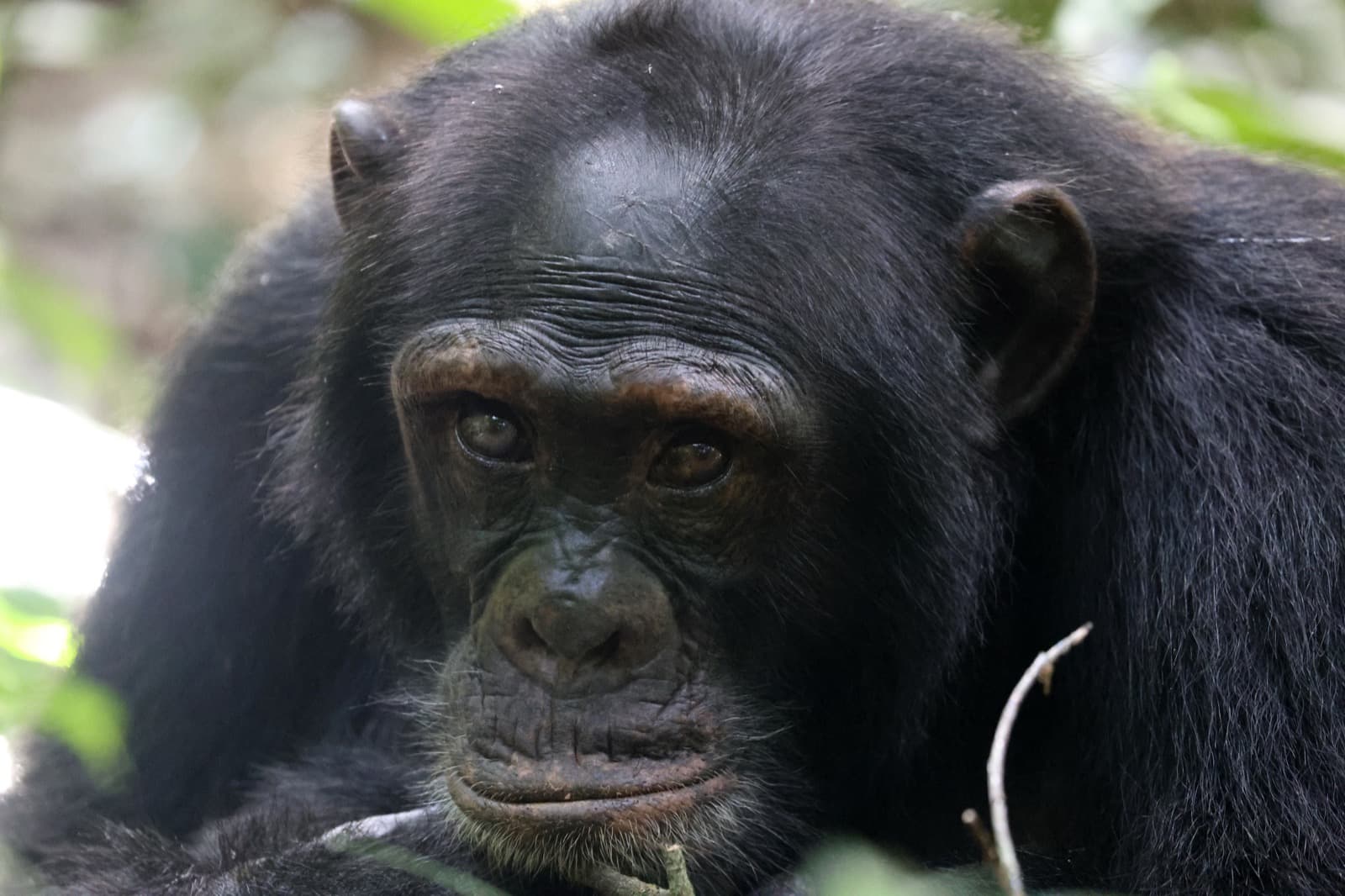
A paper published in Science on April 9 documents what researchers call the first clear case of permanent group fission and sustained lethal conflict ever recorded in wild chimpanzees. The study analyzes 24 years of social-network data, 10 years of GPS ranging data, and 30 years of demographic records from the Ngogo community -- the largest known group of wild chimpanzees, some 200 individuals in Kibale National Park, Uganda.
The paper, Lethal conflict after group fission in wild chimpanzees (DOI: 10.1126/science.adz4944), is led by anthropologist Aaron Sandel of the University of Texas at Austin, with long-time Ngogo Chimpanzee Project co-directors David Watts of Yale and John Mitani of the University of Michigan among the co-authors.
What the researchers documented
The study identifies three distinct phases in the breakdown of the Ngogo community:
- Polarization (around 2015). The single cohesive group underwent an abrupt shift into two distinct clusters, each consolidating internal bonds while cross-cluster interaction dropped. The first hostile encounter was recorded on June 24, 2015, when the Western chimps went silent on hearing the Central group, fled, and were chased.
- Avoidance (2015 to 2017). Two years of increasing spatial and social separation. By 2017 the two groups -- now called Central and Western -- occupied entirely distinct territories and patrolled their borders against each other.
- Lethal aggression (2018 to 2024). The Western group led organized, single-file patrols to the edge of their territory. When they caught a Central male, several chimps piled on, holding the victim down and beating, biting, and dragging him.
The death toll
Between 2018 and 2024, researchers directly witnessed the Western faction kill seven adult males and 17 infants from the Central group. An additional 14 adolescent or adult Central males disappeared during the same period; their bodies were never recovered. Reported attacks have continued beyond the paper's cutoff into 2025 and 2026.
Chimpanzees are known to kill individuals from neighboring communities. What makes the Ngogo case different is that the killers and victims were born and raised in the same community. The paper's authors characterize the event as "once-in-500-years" rare based on prior observations of chimpanzee societies.
Why it matters beyond primatology
A long-running debate in anthropology asks whether group violence requires cultural markers of identity -- language, ritual, ethnicity -- to motivate organized killing. The Ngogo case suggests otherwise. The Western and Central groups shared every cultural trait; they were literally the same community a decade ago. The study's authors argue that shifting social relationships alone, independent of cultural markers, can fracture a community and catalyze collective violence.
Researchers believe a combination of unusually large group size, intensifying competition over food and reproduction, deaths of key individuals, and leadership changes may have destabilized the social ties that held Ngogo together. The paper does not offer a single definitive cause.