Nebraska Joins DOJ to Nullify Its Own 2006 In-State Tuition Law for Undocumented Students in Joint Consent Decree
The Justice Department filed suit against Nebraska and, the same day, filed a joint consent decree with the state to permanently enjoin Nebraska Revised Statute 85-502, which has allowed undocumented residents to pay in-state tuition since 2006. It is the eighth such DOJ action; Nebraska is the second state after Virginia to cooperate rather than contest.
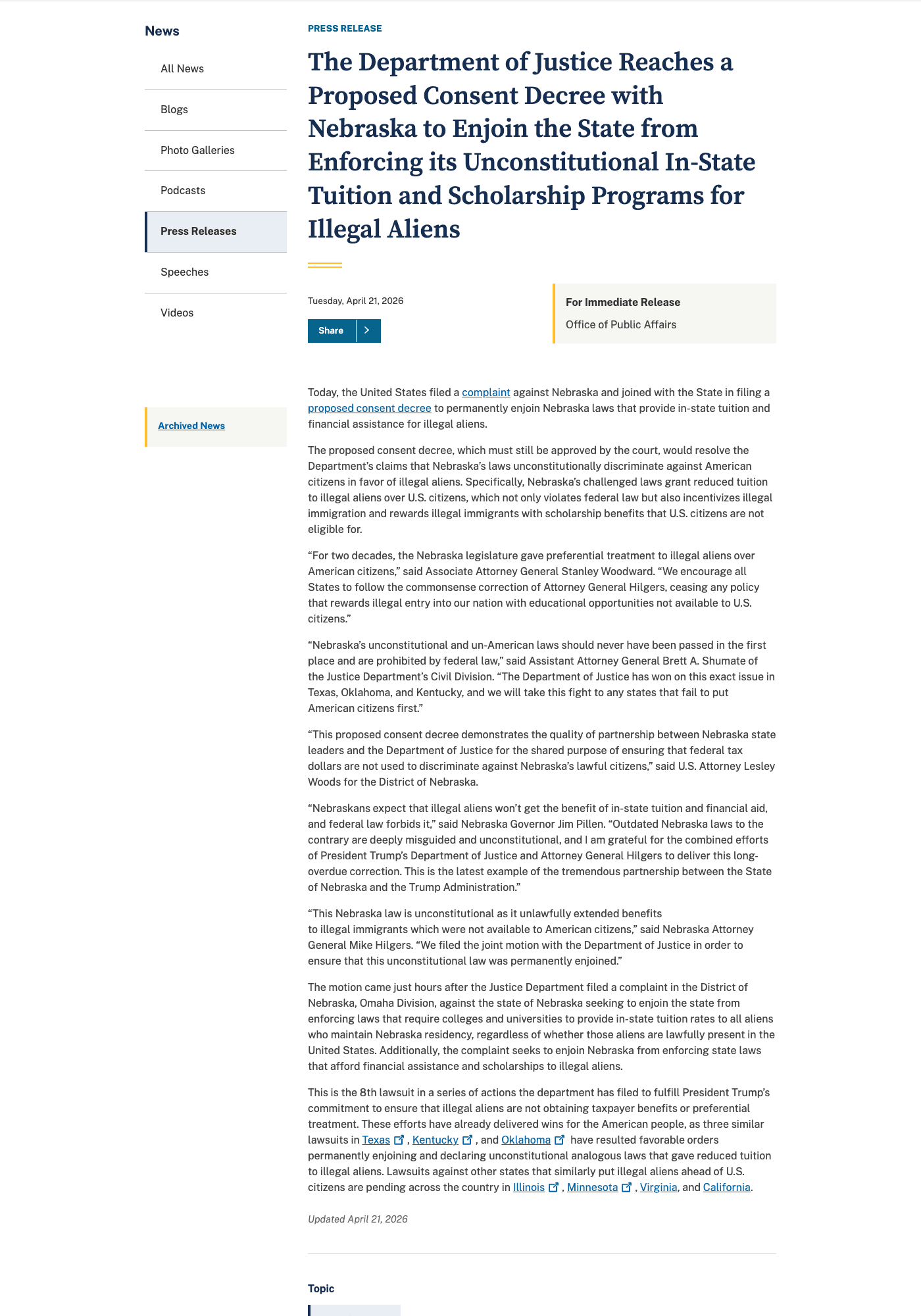
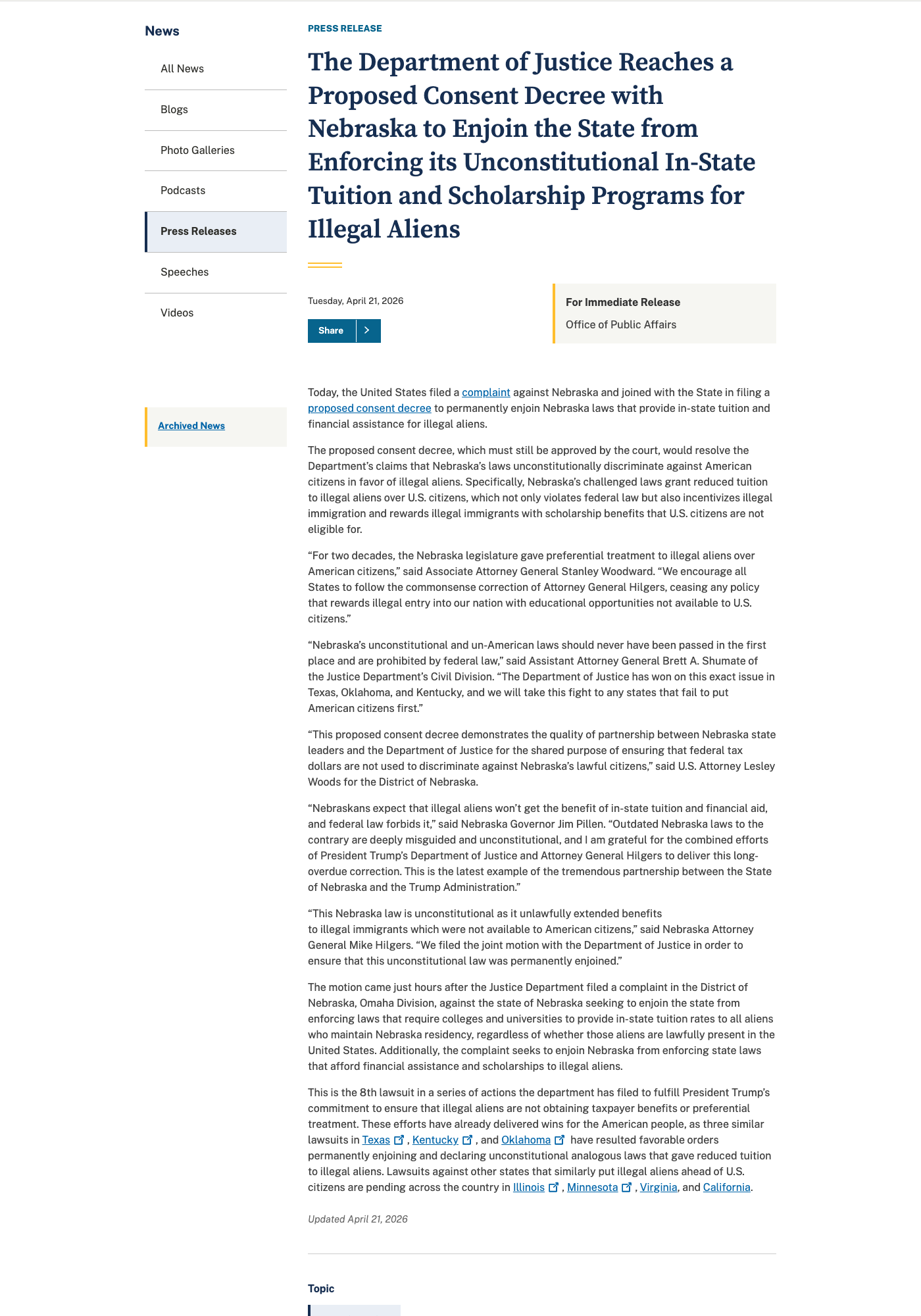
The Justice Department on Tuesday filed a complaint against Nebraska in the U.S. District Court for the District of Nebraska, Omaha Division, seeking to permanently enjoin the state's in-state tuition and scholarship programs for undocumented residents. Hours later, DOJ and the state filed a joint proposed consent decree that, if approved by the court, would resolve the case by voiding the statute.
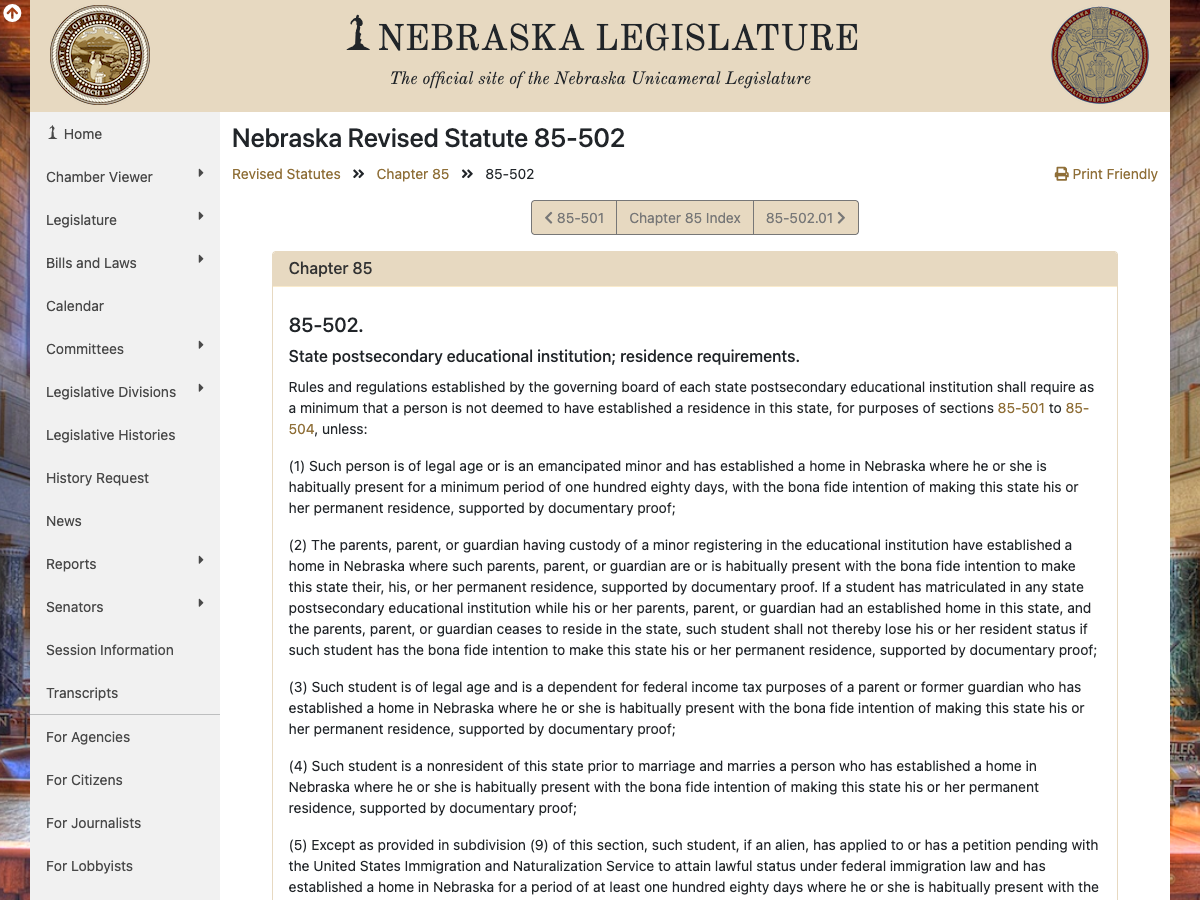
The law at issue
Nebraska Revised Statute § 85-502 was enacted by LB 239, which the Legislature passed over Governor Dave Heineman's veto on April 13, 2006. The statute lets any Nebraska resident who attended and graduated from a Nebraska high school (or obtained a Nebraska GED) pay resident tuition at state postsecondary institutions, regardless of immigration status, if they sign an affidavit pledging to seek permanent resident status when eligible. A parallel provision extends scholarships and financial aid.
The Justice Department's complaint alleges the scheme violates 8 U.S.C. § 1623, which prohibits states from conferring postsecondary education benefits on the basis of residence to unlawfully present aliens unless the same benefit is available to every U.S. citizen. DOJ frames that as unconstitutional discrimination "against American citizens."
The statements
Associate Attorney General Stanley Woodward: "For two decades, the Nebraska legislature gave preferential treatment to illegal aliens over American citizens."
Assistant Attorney General Brett A. Shumate, Civil Division: "The Department of Justice has won on this exact issue in Texas, Oklahoma, and Kentucky, and we will take this fight to any states that fail to put American citizens first."
Nebraska Governor Jim Pillen: "Outdated Nebraska laws to the contrary are deeply misguided and unconstitutional, and I am grateful for the combined efforts of President Trump's Department of Justice and Attorney General Hilgers to deliver this long-overdue correction. This is the latest example of the tremendous partnership between the State of Nebraska and the Trump Administration."
Nebraska Attorney General Mike Hilgers: "We filed the joint motion with the Department of Justice in order to ensure that this unconstitutional law was permanently enjoined."
Where it fits
DOJ describes the Nebraska action as the eighth in its series challenging state programs that extend benefits to undocumented residents. The national scorecard, as of April 21:
| State | Status |
|---|---|
| Texas | Law permanently enjoined (2025) |
| Oklahoma | Law permanently enjoined |
| Kentucky | Law permanently enjoined |
| Virginia | Consent judgment entered January 2026 (AG Jason Miyares) |
| Minnesota | DOJ suit dismissed by federal judge in March 2026 |
| Illinois | Pending |
| California | Pending |
| Nebraska | Proposed joint consent decree filed April 21, 2026 |
Nebraska is the second state (after Virginia) to enter a negotiated consent judgment rather than contest DOJ's case. Unlike Virginia, where the AG alone joined the deal over pushback from Democratic state leaders, Nebraska's governor, attorney general, and Legislature are all aligned with the DOJ position — Pillen and Hilgers are both Republicans.
The DOJ release lists Illinois, Minnesota, Virginia, and California as "pending"; Virginia's consent judgment was entered in January and the Minnesota suit was dismissed on March 30, per Inside Higher Ed.
The proposed consent decree still requires approval by the District of Nebraska before Neb. Rev. Stat. § 85-502 is formally enjoined.