Acting ICE Director Todd Lyons Resigns After Leading 584,000-Deportation Campaign, Fatal Shootings of US Citizens
Todd Lyons, who oversaw the most aggressive immigration enforcement push in ICE history including a secret warrantless home-entry policy and operations that killed two American bystanders, will step down May 31 with no successor named.
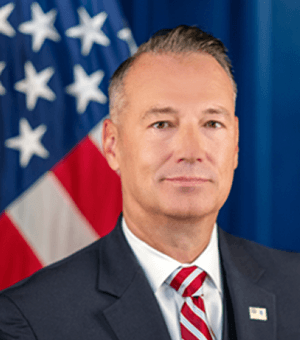
Todd M. Lyons, the acting director of U.S. Immigration and Customs Enforcement since March 2025, submitted his resignation to DHS Secretary Markwayne Mullin on Wednesday. His last day will be May 31.
Lyons leaves behind the most consequential immigration enforcement apparatus in the agency's 23-year history: approximately 584,000 deportations since President Trump's inauguration, a nearly $10 billion annual budget supplemented by $74 billion in congressional funding through the One Big Beautiful Act, and an agency of 8,600 employees operating from more than 200 domestic offices.
He also leaves behind a trail of constitutional litigation, two dead American civilians, and an agency that most Americans view unfavorably.
The Record
Lyons' tenure was defined by three episodes that made ICE a focal point of national controversy.
The warrantless entry memo. On May 12, 2025, Lyons signed a secret memorandum authorizing ICE officers to forcibly enter homes using administrative warrants -- without a judge's approval. The DHS Office of General Counsel determined that neither the Constitution nor the Immigration and Nationality Act prohibited the practice. The memo was distributed through verbal briefings only, with written copies restricted to select officials who were warned they could be fired for sharing it. Whistleblowers disclosed the policy months later.
The Minneapolis shootings. On January 7, 2026, ICE officers shot and killed Renee Nicole Macklin Good, 37, after she stopped her car to observe an enforcement operation. Weeks later, on January 24, Alex Jeffrey Pretti, an ICU nurse, was killed by federal agents while helping a pepper-sprayed civilian during another Minneapolis operation. Witnesses reported Pretti was shot multiple times in the back while restrained. The deaths triggered a DOJ investigation and congressional hearings where Lyons was asked to apologize for characterizing Good as an "agitator." He declined. "I welcome the opportunity to speak to the family in private," he told lawmakers. "But I'm not going to comment on any active investigation."
The hospitalization. In March 2026, Politico reported that Lyons had been hospitalized twice in seven months for stress-related episodes. Sources attributed the pressure to daily 10 a.m. calls with senior adviser Stephen Miller. Lyons told associates the episodes were related to previous military deployments; the White House dismissed the reporting as "inaccurate trash."
The Departure
Mullin called Lyons "a great leader of ICE" who "jumpstarted an agency that had not been allowed to do its job for four years."
Miller praised his "courageous work" that "saved countless thousands of American lives." White House spokesperson Abigail Jackson called him "an American patriot." Border czar Tom Homan described him as "a highly respected and effective acting Director."
Lyons told Mullin in his resignation letter that he wanted to spend more time with his family, including his sons who are "reaching a pivotal point in their lives," and that serving under Trump had been "a privilege." DHS said he would transition to the private sector.
A February AP-NORC poll found that most Americans held unfavorable views of ICE.
Background
Lyons joined ICE in 2007 as an immigration enforcement agent in Texas after serving in U.S. Air Force special operations, including deployments to South Korea and Europe. He was recalled to active duty after September 11 as an antiterrorism liaison with Special Operations Command Central. At ICE, he rose through Enforcement and Removal Operations -- serving as chief of staff in Dallas and field office director in Boston, overseeing six New England states -- before being named acting director on March 9, 2025, after the reassignment of Caleb Vitello.
No successor has been named. DHS Secretary Mullin must find a replacement capable of sustaining the administration's deportation pace while navigating active constitutional litigation over the warrantless entry policy and ongoing DOJ investigations into the Minneapolis deaths.