Artemis II Crew Photographs the Moon, an Eclipse, and Earth From Lunar Orbit
Four astronauts spent seven hours circling the Moon on April 6, capturing the first crewed lunar photos in 54 years -- including a rare 54-minute solar eclipse, six meteoroid impacts, and earthrise over the far side. Splashdown is April 10.
On April 6, 2026, four astronauts flew around the Moon. They are the first humans to see it up close since Apollo 17 in December 1972 -- a gap of 54 years.
The crew spent seven hours in lunar proximity, photographing terrain that no human eye has ever directly observed. They carried a Nikon D5 with an 80-400mm zoom lens -- the first modern digital camera to shoot the lunar surface from crewed orbit.
NASA released the official flyby images on April 8. Dr. Nicky Fox called them "exquisite and brimming with science" and said they "will inspire generations to come."
The Eclipse
The mission's most striking image came from the far side: the Moon passing directly between Orion and the Sun, producing a solar eclipse visible only from deep space.
The totality lasted approximately 54 minutes -- far longer than any eclipse seen from Earth's surface. The Moon appeared large enough to completely block the Sun, revealing the corona as a glowing halo around the dark lunar disk. Stars became visible in the surrounding sky.
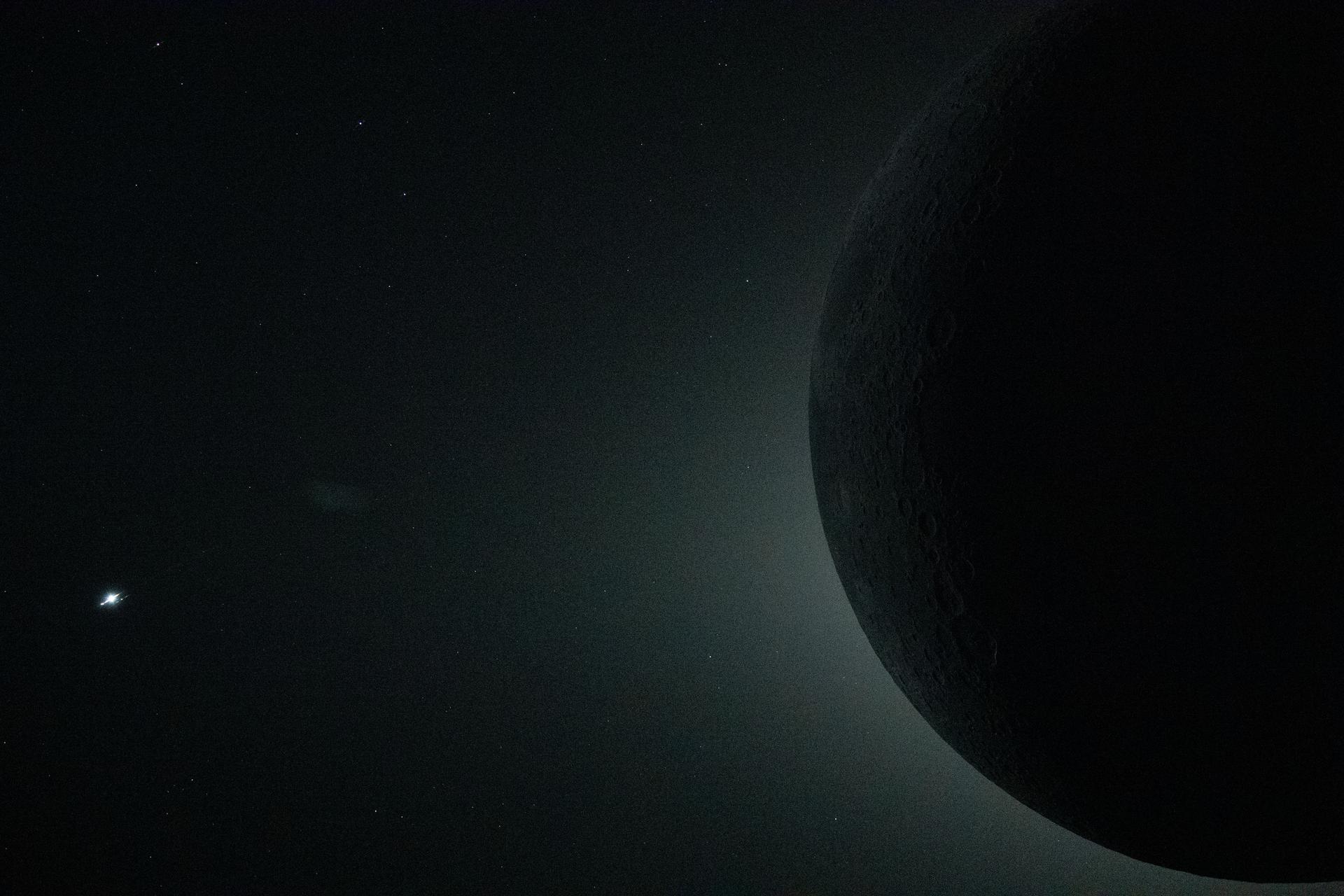 The Moon eclipses the Sun as seen from Orion during the far-side flyby on April 6. The Sun's corona forms a bright halo around the dark lunar disk. Approximately 54 minutes of totality. NASA.
The Orientale Basin
The mission's prime scientific target was the Orientale basin, a nearly 600-mile-wide impact crater that straddles the Moon's near and far sides. Until April 6, only robotic spacecraft had ever imaged it.
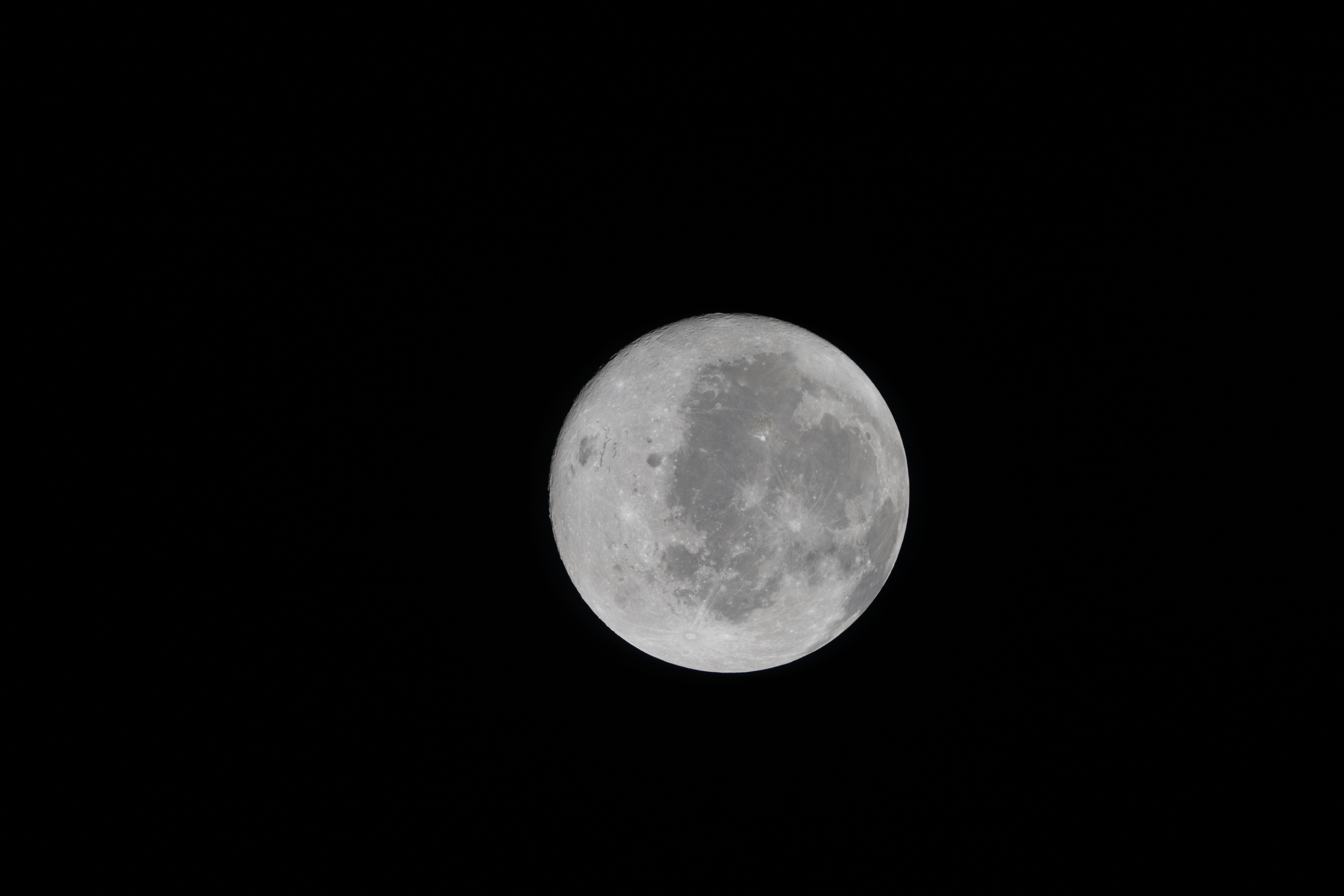 The Moon's near side, photographed from Orion on April 4, 2026. Dark patches are ancient lava flows (maria) unique to this hemisphere. The black mark on the far left edge is the Orientale basin -- 600 miles wide, straddling both sides of the Moon. NASA.
The crew captured centered images of the entire basin in a single frame and used zoom lenses to build a broader mosaic of the surrounding terrain, including Vavilov Crater, Ohm Crater, and the South Pole-Aitken basin.
Earthrise and Earthset
As Orion rounded the far side, the crew watched Earth disappear behind the Moon's limb -- then reappear on the other side.
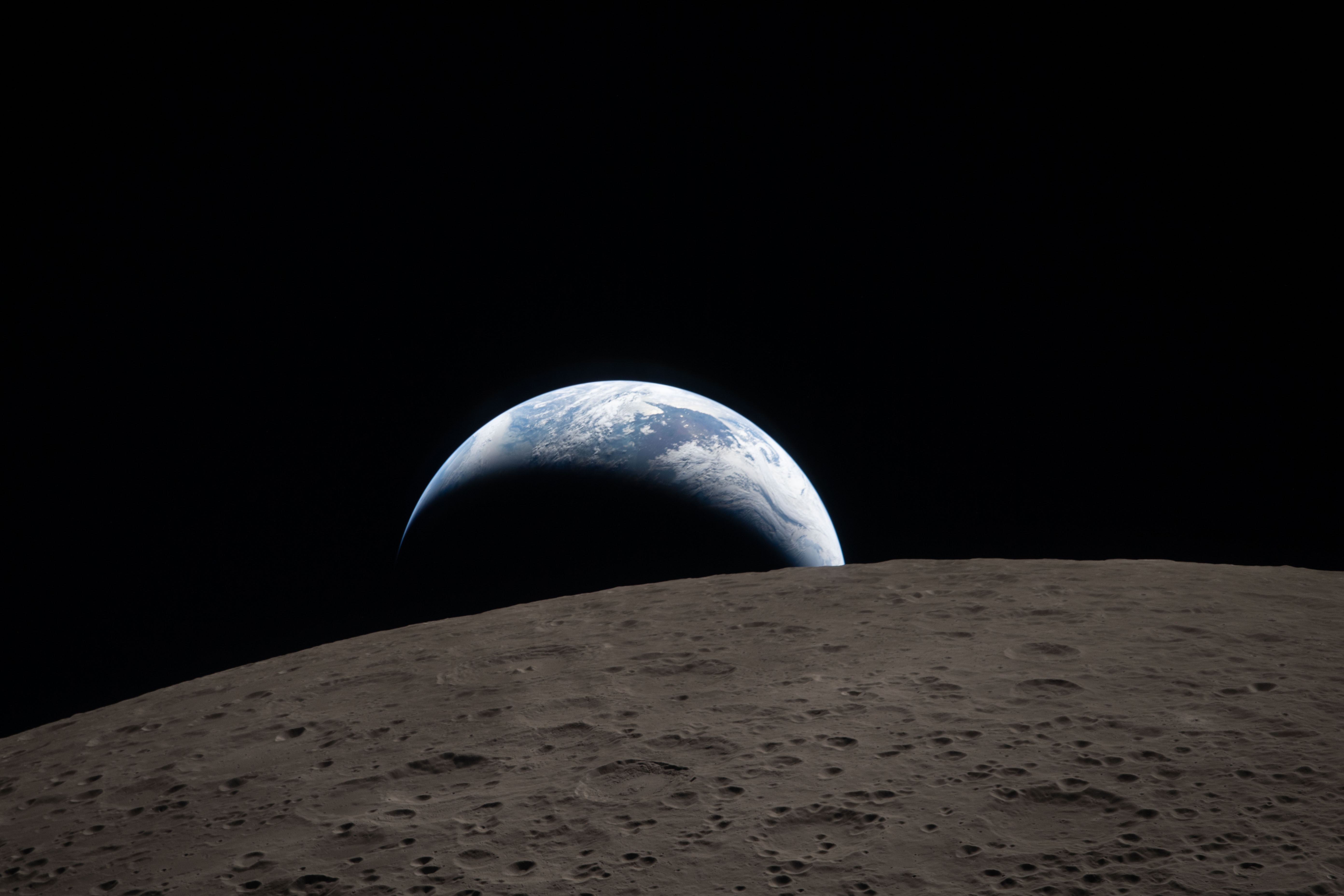 Earth sets behind the Moon's cratered surface at 6:41 p.m. EDT on April 6, captured through Orion's window. NASA.
The earthrise image, taken at 7:22 p.m. EDT, shows a crescent Earth with Australia and Oceania visible.
What They Found
Beyond the planned photography, the crew documented:
- Six meteoroid impact flashes on the darkened lunar surface -- real-time evidence of the bombardment the Moon still experiences
- Surface fractures and geologic features at resolutions the Apollo program could not achieve
- Color, brightness, and texture variations across unfamiliar far-side terrain
The Crew
Four people are aboard Orion:
- Reid Wiseman -- Commander (NASA). His third spaceflight.
- Victor Glover -- Pilot (NASA). Previously flew on SpaceX Crew-1 to the ISS.
- Christina Koch -- Mission Specialist (NASA). Holds the record for longest single spaceflight by a woman (328 days on ISS).
- Jeremy Hansen -- Mission Specialist (Canadian Space Agency). First Canadian to travel beyond low Earth orbit.
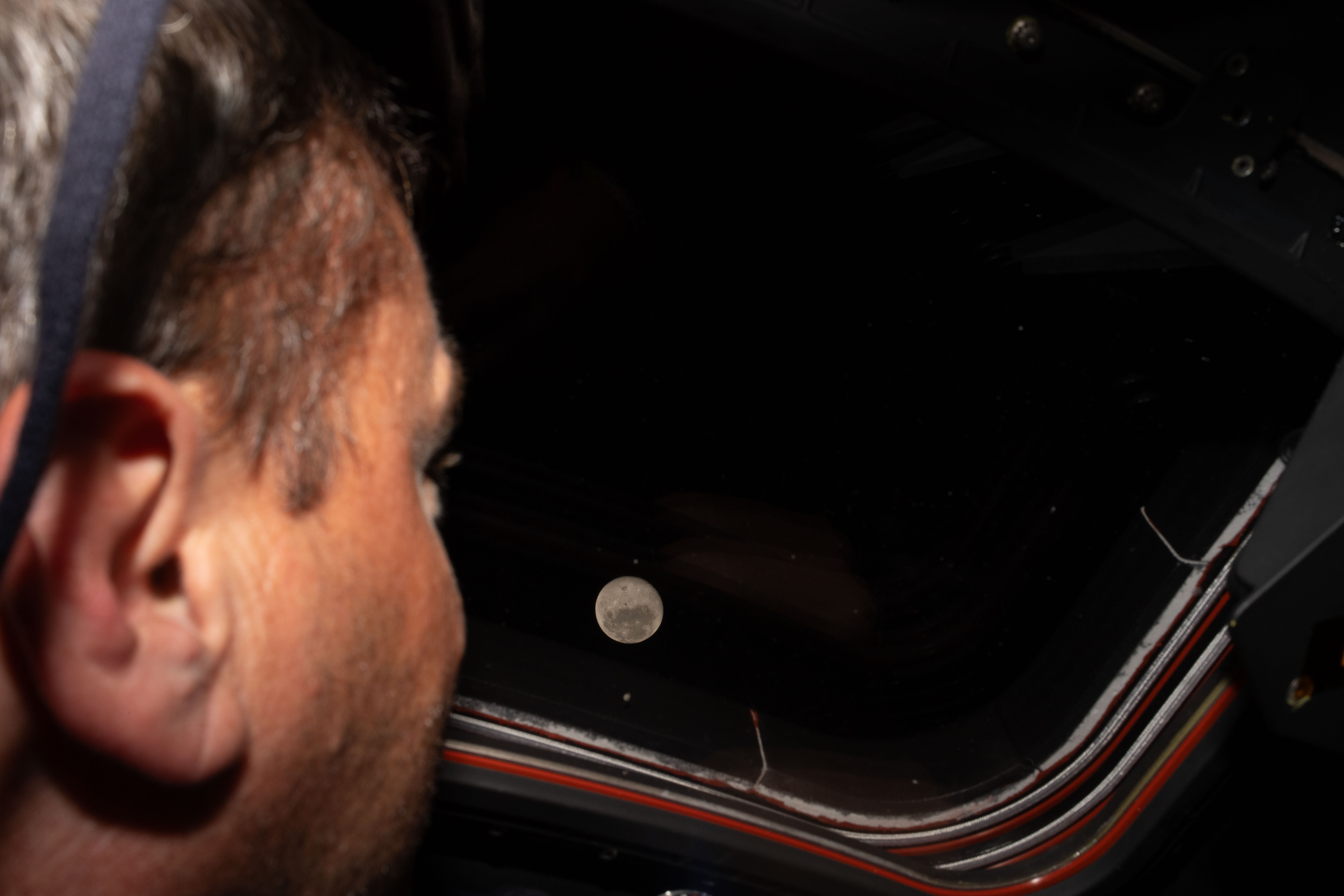 Commander Reid Wiseman looks out one of Orion's cabin windows at the Moon ahead of the flyby on April 6. NASA.
Looking Back at Earth
As the crew traveled deeper into space, Earth shrank to a thin crescent -- a perspective only 27 humans have ever witnessed.
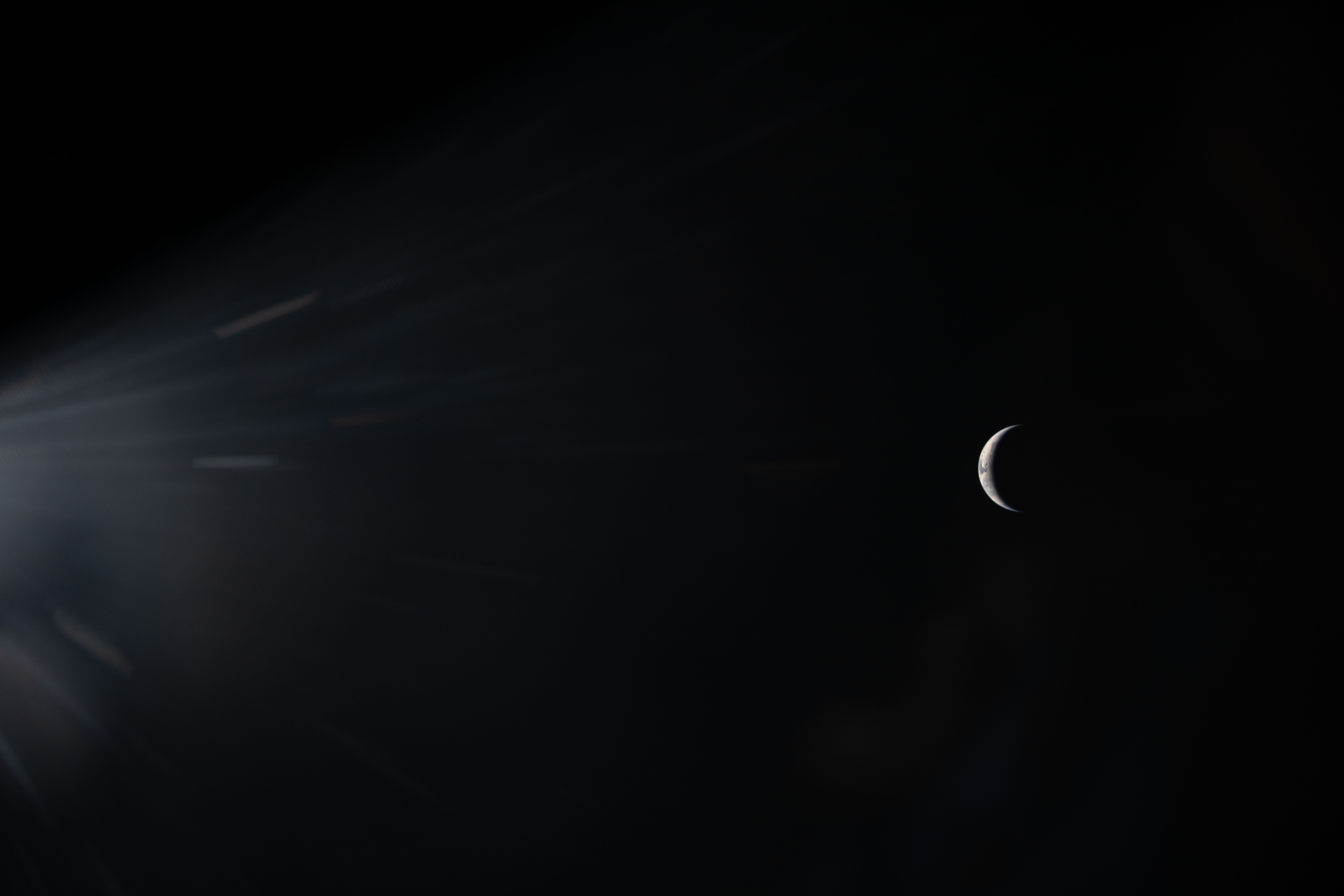 An illuminated sliver of Earth seen through Orion's window on April 3, during the crew's third day en route to the Moon. NASA.
Mission Timeline
| Date | Flight Day | Event |
|---|---|---|
| April 1 | Day 1 | Launch from Kennedy Space Center, Florida |
| April 3 | Day 3 | First crew photos of Moon and Earth; Orion selfie via solar array camera |
| April 4 | Day 4 | Near side of Moon photographed; South Pole and Orientale basin visible |
| April 5 | Day 5 | Entered lunar sphere of influence; crew demos suits |
| April 6 | Day 6 | Lunar flyby -- seven hours in proximity; far side, eclipse, earthrise/set, six meteoroid impacts observed |
| April 8 | Day 8 | NASA releases official flyby photos |
| April 10 | Day 10 | Targeted splashdown off San Diego, 8:07 p.m. EDT |
54 Years
The last humans to see the Moon from this distance were Eugene Cernan, Harrison Schmitt, and Ronald Evans aboard Apollo 17 on December 19, 1972. They shot the lunar surface on Hasselblad film cameras with fixed lenses.
The Artemis II crew's Nikon D5 sensor and 80-400mm zoom produce images at resolutions the Apollo program could not have achieved. Full-resolution mosaics of the Orientale basin and far side terrain are expected in the coming weeks as mission data is downlinked and processed.
Artemis III, which will land astronauts on the lunar surface for the first time since 1972, is targeted for 2027.