Russia's Supreme Court Designates Memorial an 'Extremist Organization,' Ruling Takes Immediate Effect
The Supreme Court of the Russian Federation granted the Ministry of Justice's motion on April 9 to designate the International Public Movement Memorial an extremist organization and ban its activity on Russian territory. The court said Memorial is 'under the influence of a destructive ideology' and acts to 'destroy the fundamental foundations of Russian statehood.' Memorial was awarded the Nobel Peace Prize in 2022.
The Supreme Court of the Russian Federation on Thursday ruled to designate the 'International Public Movement Memorial' an extremist organization and banned its activity and that of its structural subdivisions on Russian territory. The decision takes effect immediately, the court specified.
'Application granted, recognize the International Public Movement Memorial as an extremist organization, prohibit its activity and the activity of its structural subdivisions on the territory of the Russian Federation,' the judge announced, according to RIA Novosti, the Russian state news agency, which reported from inside the courtroom at 13:43 Moscow time.
The main part of the hearing was conducted in closed session. Representatives of foreign embassies, including European ones, attended. The case file had been classified 'top secret' in advance of the hearing, according to a statement issued the same day from Geneva by the International Memorial association and published by its German affiliate, Memorial Deutschland.
The court's stated reasoning
The Supreme Court said the movement's activity is 'markedly anti-Russian in character, directed at destroying the fundamental foundations of Russian statehood, violating territorial integrity, and nullifying historical, cultural, spiritual and moral values.'
Citing what it called a 'destructive ideology on which the organization's activity is based,' the court said that 'with respect to six persons, guilty verdicts have been rendered for public calls to carry out terrorist activity, public justification of terrorism, organizing the activity of a terrorist organization and participating in the activity of such organization, [and] public actions aimed at discrediting the Armed Forces of the Russian Federation.' The court did not name the six.
What it means in Russian law
Under Article 282.2 of the Russian Criminal Code, organizing the activity of a designated extremist organization is punishable by up to twelve years in prison, and participation in such an organization by up to eight years. Financing of an extremist organization carries the same penalties. The Ministry of Justice's Federal Financial Monitoring Service (Rosfinmonitoring) freezes the bank accounts of individuals added to its 'List of Extremists and Terrorists.'
The Ministry of Justice's motion, filed March 27, named 196 'active participants' in the movement, according to the independent Russian news outlet Meduza. The Ministry has not published the list publicly.
Timeline
| Date | Action |
|---|---|
| 1989 | Memorial founded in late Soviet period to document political repression |
| May 2014 | Russia-based Memorial Human Rights Center designated a 'foreign agent' |
| November 2021 | Prosecutor General's Office files liquidation suits against International Memorial (Supreme Court) and Memorial Human Rights Center (Moscow City Court) |
| December 2021 | Both liquidation suits granted; organizations dissolved |
| October 2022 | Memorial awarded the Nobel Peace Prize |
| March 27, 2026 | Ministry of Justice files extremism lawsuit against 'International Public Movement Memorial' |
| April 9, 2026 | Supreme Court grants the motion; ruling immediately enforceable |
Memorial's response
In a statement dated April 9 and released from Geneva, the International Memorial association wrote: 'An organization with this designation does not exist. But given the repressive practices of the Putin regime, there is no doubt that the ''defendant'' in the lawsuit was deliberately designated so vaguely and unclearly, and not out of negligence, but quite consciously. This creates the preconditions for further repression in Russia against any Memorial organizations, as well as against their members and supporters.'
The statement continued: 'It is difficult to imagine anything more absurd than the accusation of extremism against Memorial — a globally known community that was awarded the Nobel Peace Prize in 2022 for its work.'
'Memorial will outlast the Putin regime and one day resume work in Russia,' the statement concluded. Memorial Deutschland, the German affiliate, endorsed the statement.
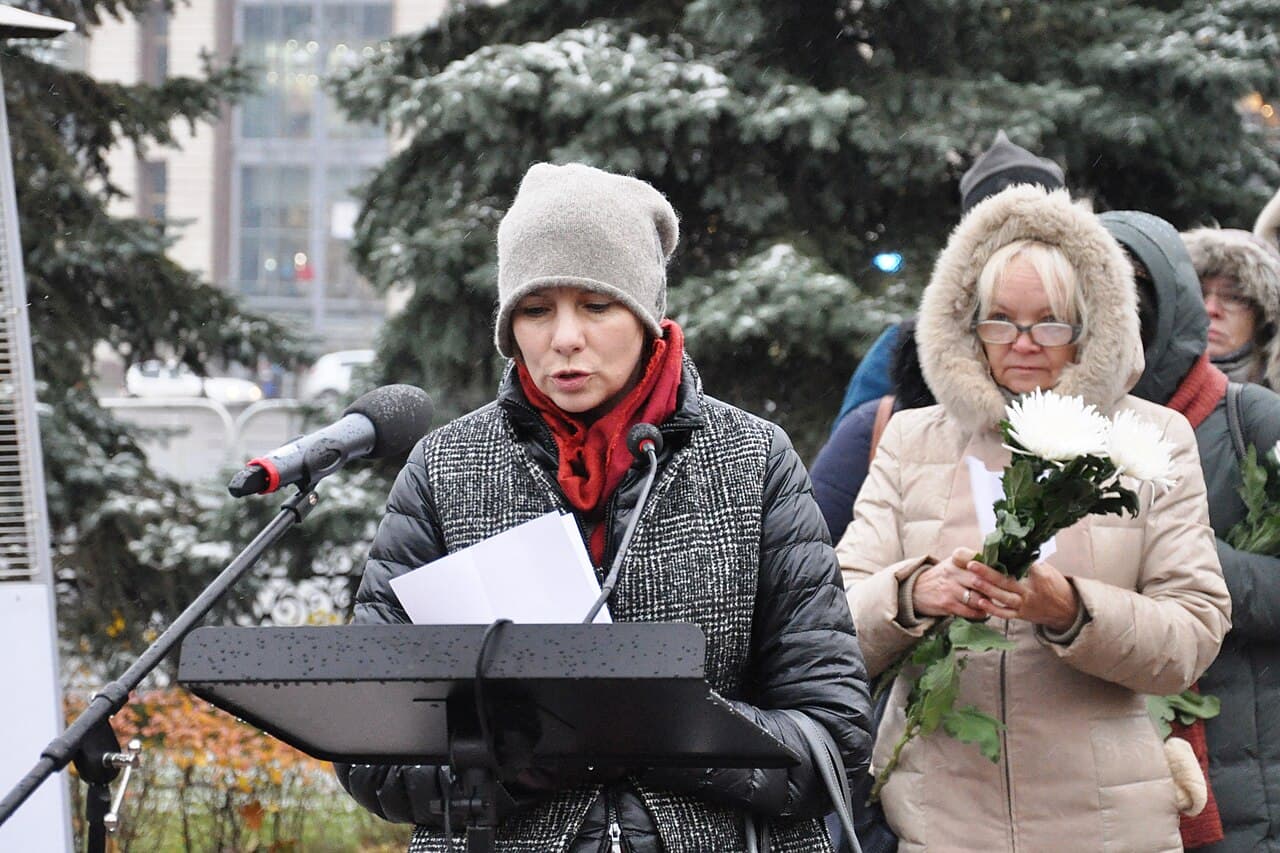
Memorial has, since its Soviet-era founding, documented the history of Stalin-era state terror and the rehabilitation of its victims, and run a network of legal aid programs for refugees and political prisoners. Its best-known public ritual is 'Return of the Names,' an annual reading of the names of victims of Soviet state terror held on October 29 at Lubyanka Square in central Moscow, across from the former KGB headquarters.